What Is AI Filmmaking?
AI filmmaking is the use of artificial intelligence as a creative and production tool across the filmmaking process: writing, script breakdown, concept art, storyboarding, character references, generated video, voice, sound, editing, and localization. The best version is still director-led. AI creates or accelerates shots and assets, but filmmakers define story, continuity, pacing, performance, rights, and final editorial judgment.
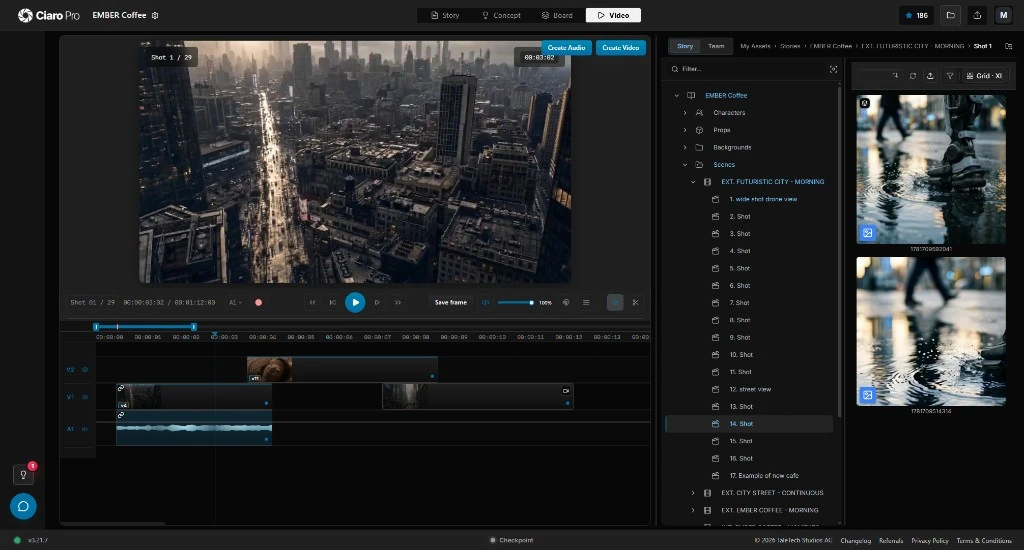
Definition
AI filmmaking, defined
Some AI films are fully synthetic, built from generated images, video, voices, and music. Others are hybrid productions where AI helps with previs, VFX, dubbing, cleanup, or editorial tasks around filmed material.
The important distinction is not whether AI appears somewhere in the toolchain. It is whether the production has enough structure to turn generated assets into a coherent film: script, shot plan, cast continuity, edit, sound, rights, and delivery.
For the commercial software page, use AI filmmaking software and how Ciaro Pro connects the workflow.
Definition
AI filmmaking is filmmaking where artificial intelligence assists with or generates parts of development, pre-production, production, post-production, or distribution while human creators direct the story and final cut.
How it works
How does AI filmmaking work?
AI filmmaking still follows the logic of film production, but generative tools compress or replace parts of the traditional pipeline.
Develop the story
Write a premise, outline, screenplay, and scene structure with human direction and optional AI assistance.
Break the script into production data
Identify scenes, cast, locations, props, visual effects, and continuity requirements before generating shots.
Design the visual world
Create mood boards, character assets, location references, and storyboard frames that lock style and continuity early.
Generate shots with references
Use text-to-video or image-to-video models per shot, guided by storyboard stills as start, end, or general scene references.
Edit, sound, and finish
Assemble clips on a timeline, add sound and music, fix continuity, grade, subtitle, disclose, and export.
Benefits
What AI changes for filmmakers
Faster visual iteration
Directors can test scenes, looks, and camera ideas before committing to expensive production steps.
Lower production barriers
Small teams can attempt shots and worlds that previously required large crews or VFX budgets.
More complete previsualization
Scripts can become boards, animatics, and early motion tests while the story is still flexible.
Reusable production assets
Character, location, prop, and storyboard references become libraries instead of disposable prompts.
Shot-level experimentation
Creators can try alternate framing, lighting, motion, and model choices per shot.
Director-led control
A real workflow keeps creative decisions with the filmmaker instead of delegating the whole film to a model.
Workflow example
A practical AI filmmaking pipeline
The strongest AI films come from a structured production, not a single prompt.
- 1
Script and breakdown
Write the scene, tag characters and requirements, and decide what the audience must understand.
- 2
Shot plan and storyboard
Turn the scene into coverage, character-aware references, and approved still frames before video generation.
- 3
Reference-led generation
Feed storyboard stills and character assets into the video model, then choose the usable motion.
- 4
Timeline assembly
Trim clips, add sound, preserve continuity, and finish the scene like a film editor.
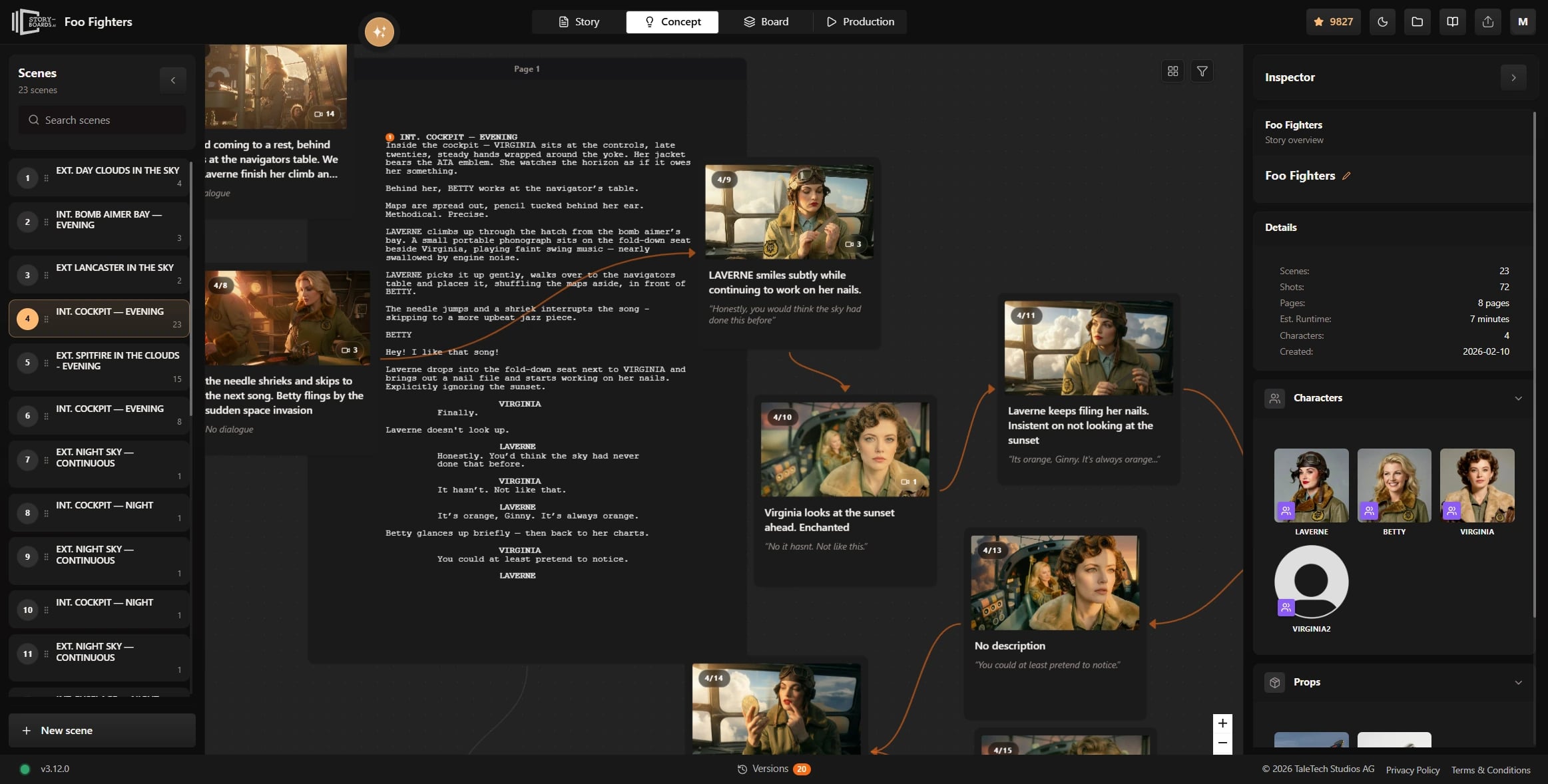
A common early step is script to storyboard before moving into generated video.
Comparison
AI filmmaking vs AI video generation
Search engines often collapse these terms, but they solve different problems.
Question
AI filmmaking
AI video generation
What is the output?
A film, sequence, campaign, or finished cut
A generated clip or set of clips
What guides the work?
Script, shot plan, character assets, storyboard references, edit decisions
Prompt and optional image input
What must stay consistent?
Story, cast, style, geography, sound, pacing
Usually one clip at a time
Where does editing happen?
Timeline, review, sound, export
Often outside the generator
Who directs it?
Human filmmaker using AI tools
Model interprets a request
Use cases
What can AI filmmaking be used for?
The same AI film pipeline can support narrative, commercial, educational, and studio workflows.
Short films and pilots
Prototype ambitious scenes and finish short-form narrative work without a full traditional crew.
Previs and visual development
Test worlds, characters, and action before live action, animation, or VFX spend.
Spec films and campaign assets
Move from brief to boards to polished concepts fast while maintaining brand continuity.
Training and explainers
Turn structured scripts into visual lessons with reusable characters and locations.
Proof
AI filmmaking needs workflow, not just models
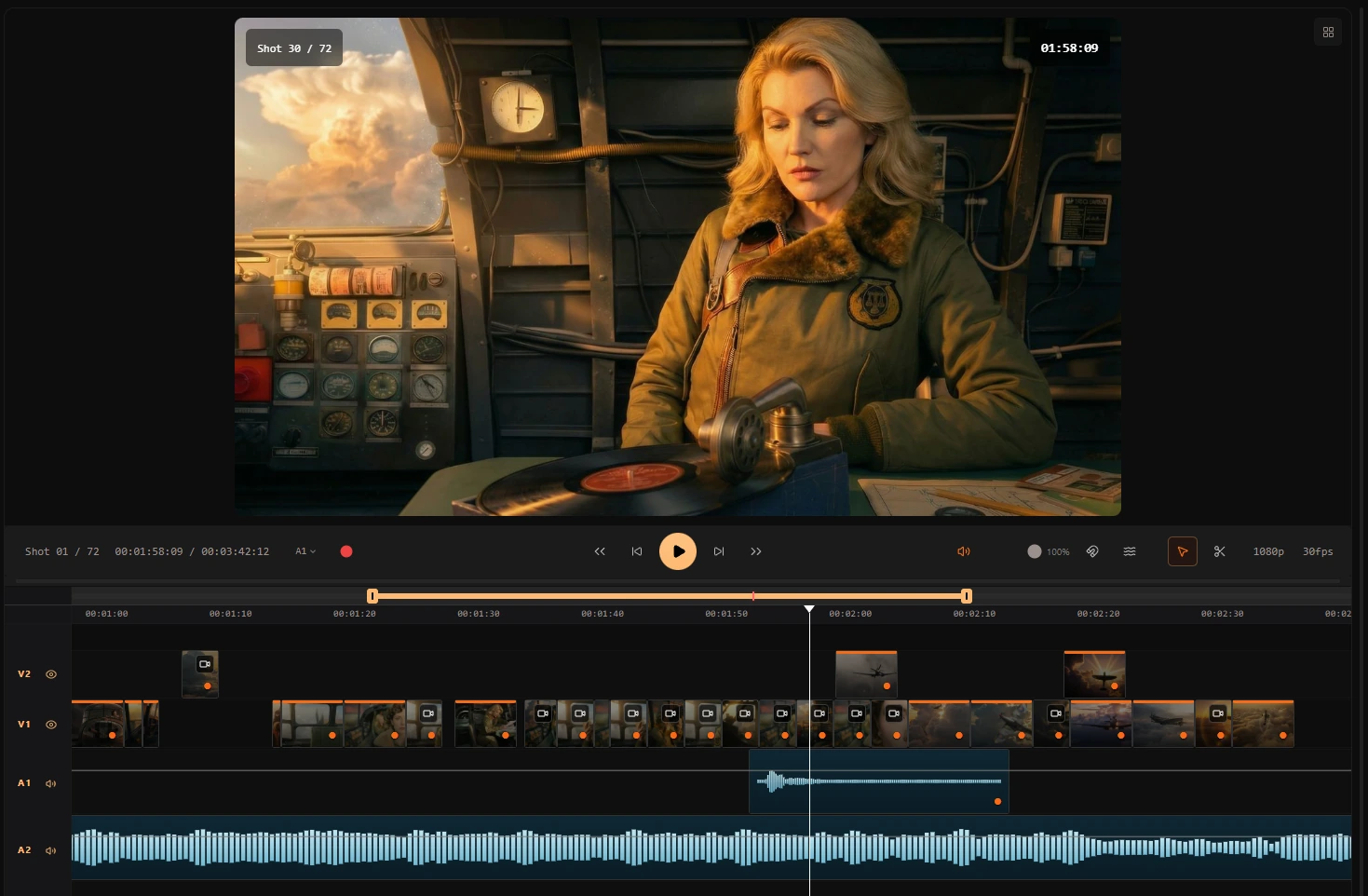
Model names change. What does not: scripts, boards, characters, generated takes, asset management, and finishing on a timeline. Ciaro Pro is that production layer around whatever model you pick.
4 min
Finished Biome Brigade showcase runtime
Script
Scenes stay the source of the plan
Boards
Coverage before generation spend
Timeline
Takes judged in the cut, not in a folder
FAQ
Frequently asked questions
Is AI filmmaking the same as text-to-video?
No. Text-to-video is one generation method inside AI filmmaking. A film workflow also includes story development, script breakdown, shot planning, character references, storyboards, editing, sound, rights, and delivery. Text-to-video can make footage; filmmaking turns footage into a coherent story.
Can AI make an entire film?
AI can generate many ingredients of a film, including images, video, voices, music, and edits. But current professional results still require human direction: story choices, continuity control, shot selection, sound design, legal clearance, and final editorial judgment.
What tools are used in AI filmmaking?
Common categories include screenwriting assistants, storyboard tools, image generators, character reference systems, text-to-video and image-to-video models, voice and music tools, VFX utilities, and editors such as DaVinci Resolve or Premiere. Ciaro Pro focuses on connecting these stages around a film project.
Why do many AI films look inconsistent?
Many AI films are built from unrelated prompts. Without a script-linked shot plan, approved references, character continuity, and editorial review, faces, costumes, locations, lighting, and geography drift from shot to shot.
Do AI filmmakers still need storyboards?
Usually, yes. Storyboards or keyframes give video models concrete composition and motion intent. They also let directors approve framing before spending credits on generation and help editors assemble the final sequence.
What are the legal concerns in AI filmmaking?
Teams need to consider model terms, training-data disputes, actor likeness, voice consent, music rights, source footage rights, and disclosure requirements. Professional workflows should track where generated assets came from and whether they are cleared for commercial use.
Explore next
Related answers and features
AI filmmaking connects writing, visual planning, generation, sound, and editorial in one director-led workflow.
Direct the workflow, not just the prompt
Use Ciaro Pro to connect script, boards, characters, generated clips, and editing in one AI filmmaking workspace.