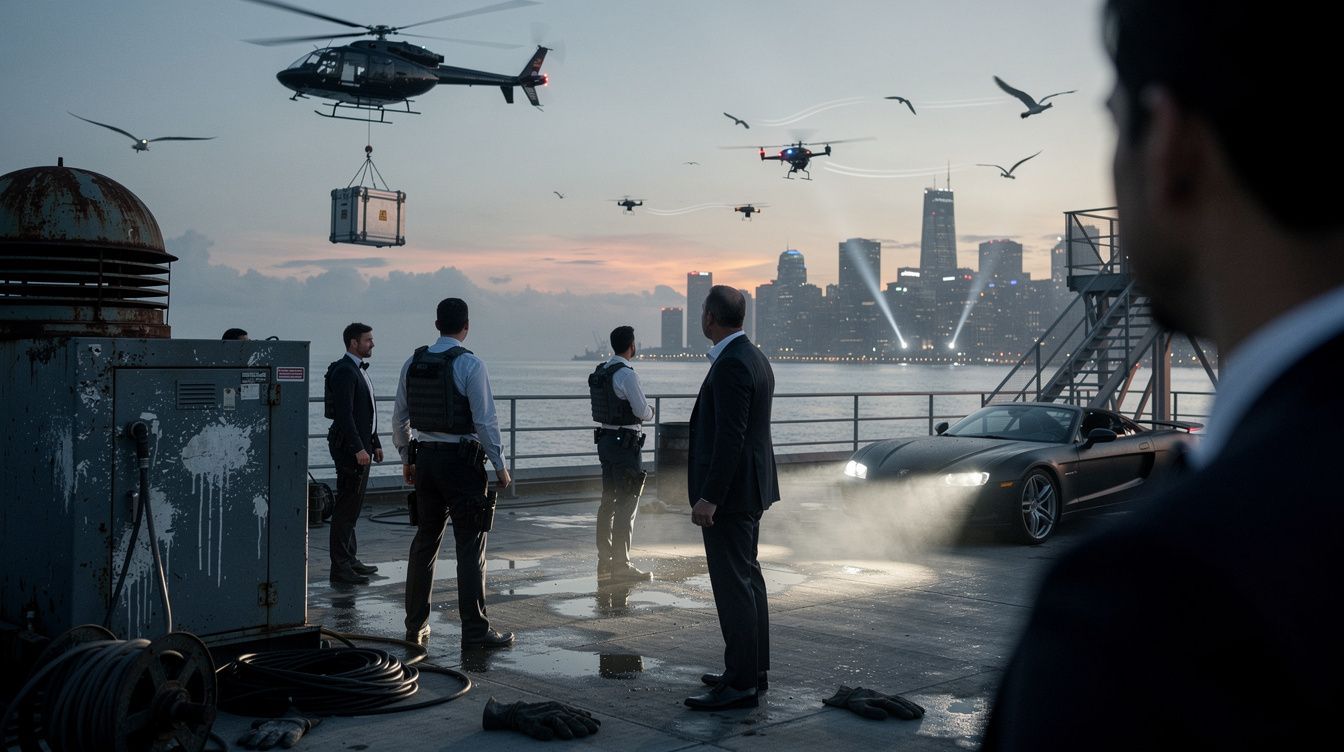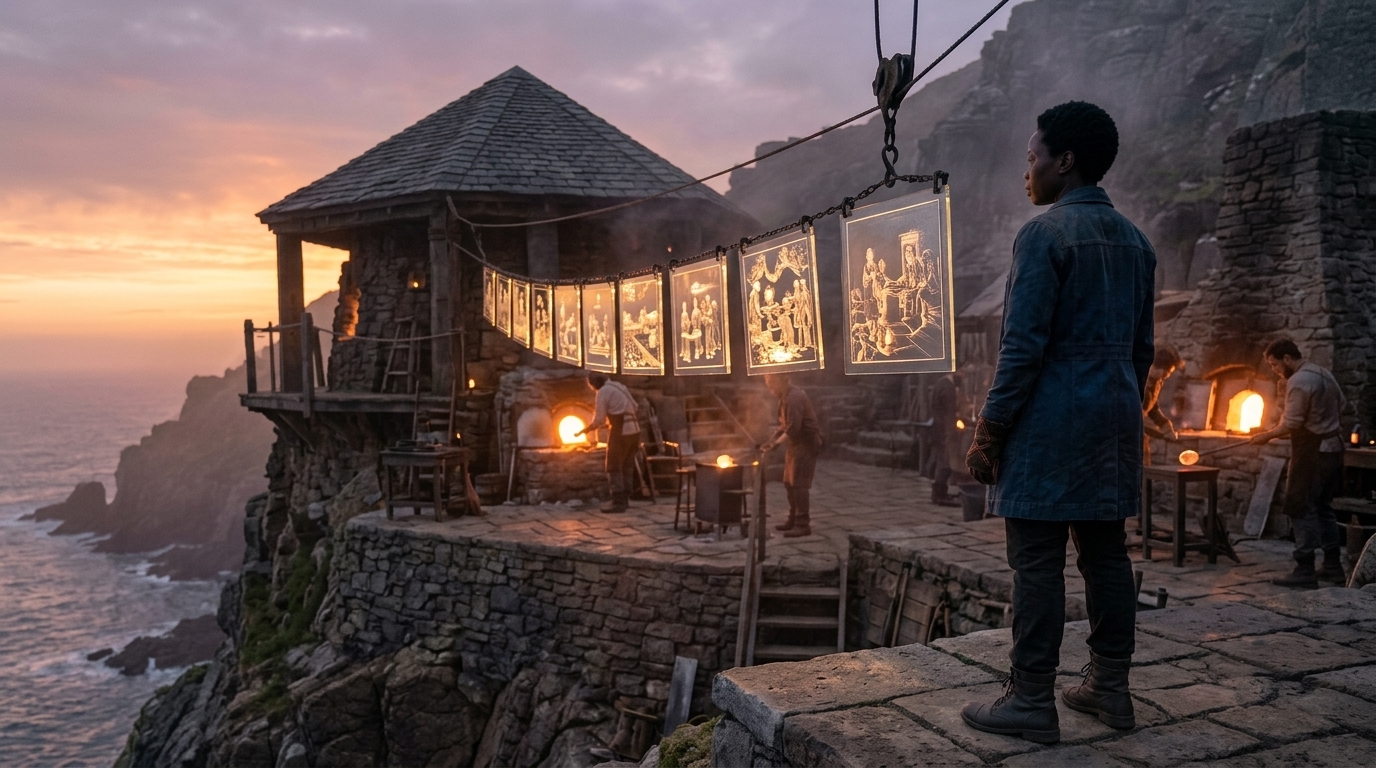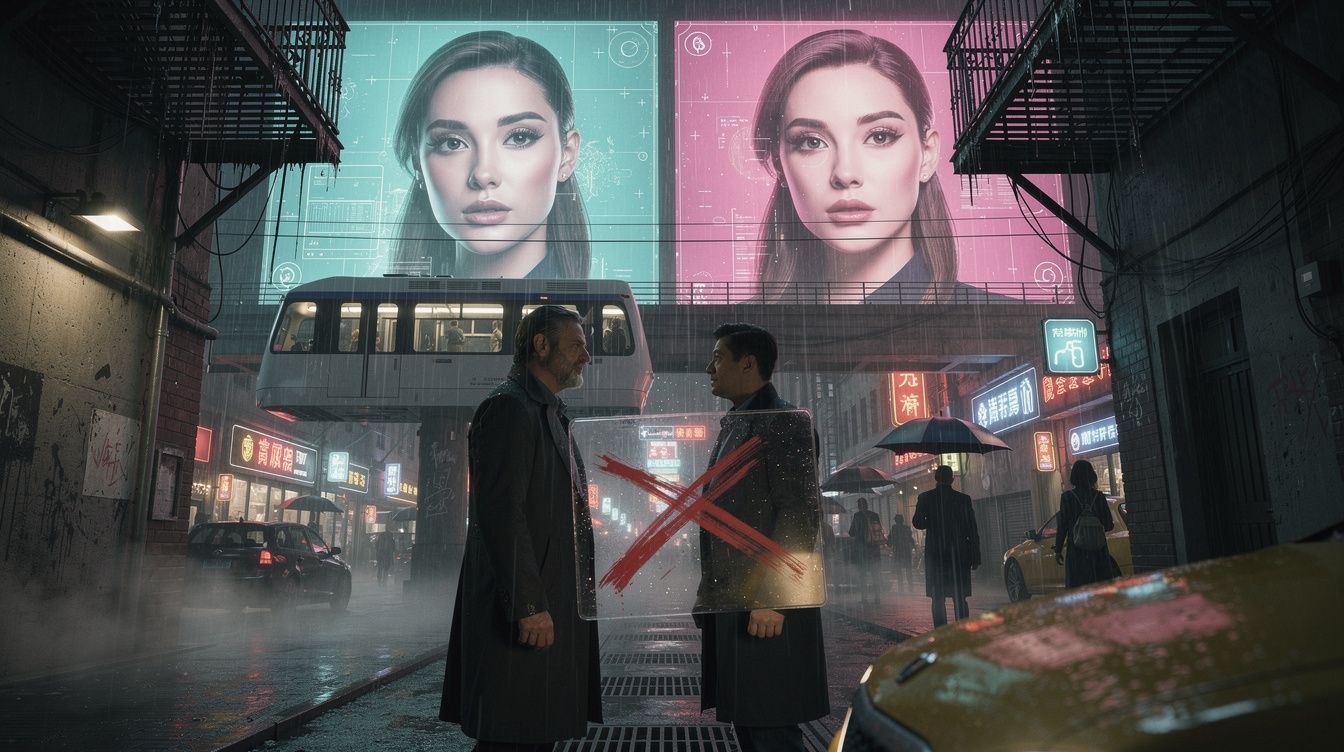
From “Is It Good Enough?” to “Can It Hit the Shot?”
Not long ago, the public case against AI filmmaking could be summed up in one absurd image: Will Smith eating spaghetti. That clip became a benchmark for early video generation because it exposed the medium’s weaknesses all at once—broken anatomy, unstable motion, drifting faces, and the general sense that the machine understood neither bodies nor cause and effect.
That was the phase when the debate was mostly about quality. Could AI video produce anything cinematic enough to matter, or was it destined to remain a novelty?
By 2026, that is no longer the most useful question. The visual leap has been too significant to ignore. In controlled cases, today’s systems can produce lighting, texture, atmosphere, and shot design that look far more credible than the spaghetti era ever suggested.
Even industry reporting has shifted away from “can it make a pretty image?” toward whether filmmakers can actually direct the result; as The Verge noted in its reporting on Hollywood’s prompting problem, the issue is increasingly control, not just surface realism.
That distinction is everything for professionals. A shot can be visually impressive and still be unusable. If the eyeline is wrong, the pause lands late, the camera drift changes the scene’s power dynamic, or the character comes back off-model in the reverse, the image has failed its job. In filmmaking, quality is not just how good something looks. It is whether it delivers the intended dramatic function.
So the real hurdle in AI filmmaking now is workflow. Not whether a model can generate something striking, but whether it can reliably generate the exact thing the director, cinematographer, editor, or animation lead needs—on demand, across revisions, and in continuity with the rest of the film.
That is the standard that determines whether AI filmmaking is ready for the big screen. In some contexts, it already is. But only when the tools behave less like improvisers and more like a disciplined department inside a larger production pipeline.
Why Quality Is No Longer the Main Hurdle
The Will Smith spaghetti clip still matters because it marks the old argument clearly. Early AI video failed in obvious ways, so the conversation centered on believability. Could generated footage hold up long enough to be taken seriously on a large screen?
Now the answer is more nuanced, but also more favorable than it was a few years ago. AI video quality has improved dramatically. In short bursts, controlled shots, stylized work, and carefully managed sequences, video generation can now produce imagery that approaches high-end commercial, animation, and VFX aesthetics. That does not mean every model, every shot, or every workflow is at that level. It means the blanket claim that AI video simply cannot look cinematic is no longer credible.
That is why the debate has moved. As WIRED reported from Hollywood-facing AI film experiments, the concerns around professional use are increasingly about standards, trust, and process rather than whether the images are inherently laughable. For filmmakers, that is a major shift. Once image quality crosses a certain threshold, the bottleneck stops being visual plausibility and becomes production reliability.
A feature is not built from isolated hero frames. It is built from coverage, continuity, editorial rhythm, performance control, approvals, and finishing. A generated shot may look excellent on first viewing and still fail because it cannot be matched, revised, extended, or cut against adjacent material. That is why quality is no longer the main hurdle for AI filmmaking. The harder problem is precision.
Can the system hit the intended shot, not just a good-looking shot? Can it preserve the same character across angles? Can it hold lens logic across a sequence? Can it give a director the exact emotional timing of a reaction rather than a statistically plausible approximation? Those are the questions that matter on a professional production.
So when people ask whether AI filmmaking is ready for big-screen use, the honest answer is no longer blocked by image quality alone. It depends on whether the workflow can turn generative possibility into repeatable authorship.
What the Workflow Problem Actually Is
If workflow is now the real challenge, it helps to be specific about what that means. In professional filmmaking, a workflow is not just a sequence of tools. It is the system that preserves intent from development through final delivery.
In development, AI is already useful for concept exploration, visual research, mood work, and early worldbuilding. It can accelerate the search phase. But even here, the professional requirement is not infinite variation. It is convergence. The team needs to move from possibility toward a defined visual language.
In look development, the problem becomes consistency. A film needs stable rules: this face, this costume logic, this production design vocabulary, this palette, this lens behavior. Generating one strong image is easy compared with maintaining a coherent visual world across dozens or hundreds of shots.
Character consistency is where many systems still reveal their limits. A professional filmmaker does not just need “the same person, roughly.” They need the same character under different lighting conditions, focal lengths, emotional states, and camera distances, without identity drift. The same applies to environments, props, and costume details that editorial will notice immediately once scenes are cut together.
Shot design raises the bar again. Directors and cinematographers think in blocking, lens choice, camera path, screen direction, staging geography, and performance timing. Prompt-based interfaces are still weak at expressing that full stack of intent. A filmmaker may know exactly what the shot is—a 50mm push-in that arrives half a beat after the actor realizes the betrayal—but translating that into a dependable generative instruction remains difficult.
Iteration is another major pressure point. Traditional production assumes revision. Notes come in. Editorial changes the scene. A performance needs to be softened. A shot needs to start later. Coverage needs a matching insert. The question is not whether AI can generate a first pass. It is whether it can generate the tenth pass without losing continuity or forcing the team to start over.
Then comes editorial integration. A shot does not live alone. It has to cut. It has to preserve screen direction, match action, support pacing, and survive changes after the assembly. This is where many impressive demos run into real production friction. A beautiful clip that cannot be trimmed, extended, matched, or versioned cleanly is not yet a dependable production asset.
Finishing adds another layer. Big-screen work has standards for resolution, cleanup, color consistency, artifact removal, compositing, legal review, and delivery. A shot may be creatively successful and still fail finishing because the edges break, the motion falls apart under scrutiny, or the image does not hold up in a theatrical pipeline.
Finally, there are approvals. Producers, directors, VFX supervisors, editors, and clients all need to review versions, compare options, track changes, and sign off with confidence. That means versioning, continuity tracking, and repeatability are not administrative extras. They are core parts of an AI filmmaking workflow.
This is why workflow, not output, is the current bottleneck. The challenge is not generating something interesting. It is building a process that can carry precise creative intent through development, iteration, editorial, and finishing without collapsing into randomness.
Precision Is the Professional Standard
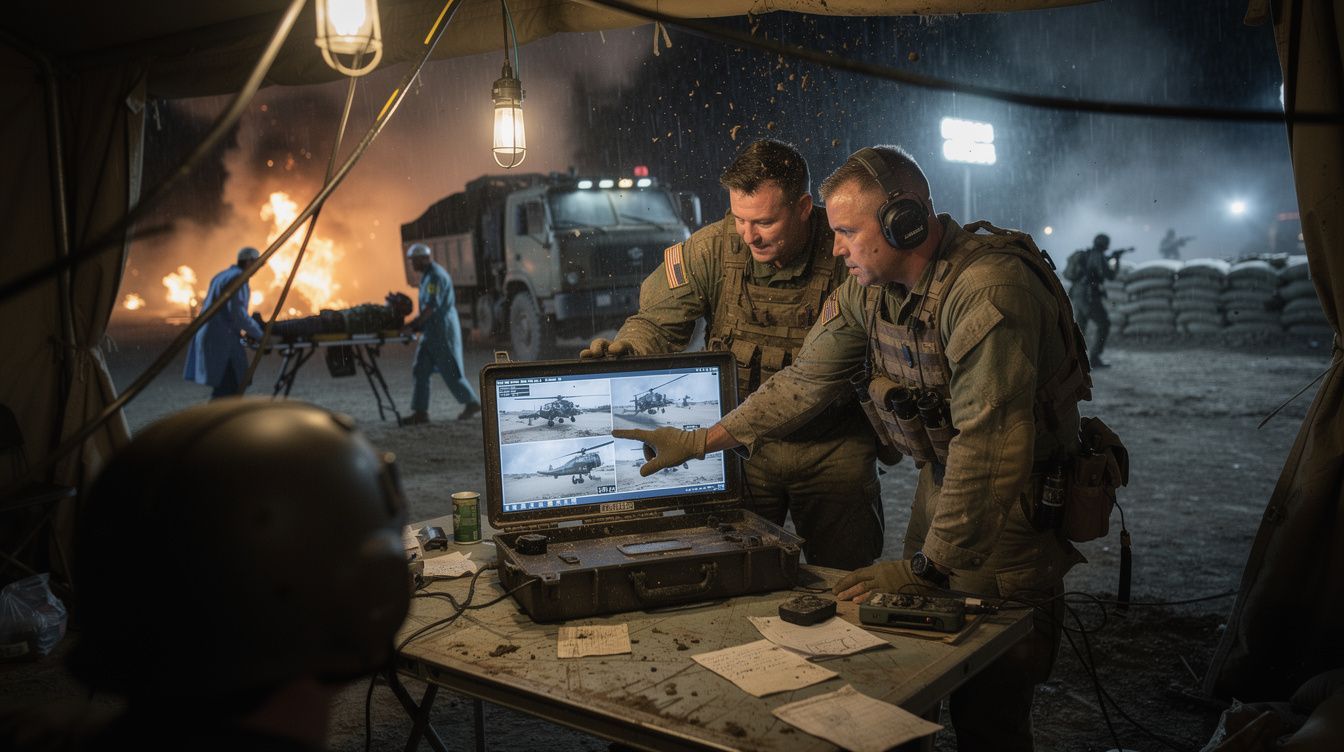
For professionals, AI filmmaking is now a precision problem.
The question is not whether a model can surprise you with something compelling. The question is whether it can reliably hit the director’s intended shot, performance, and tone on demand. That is a much higher bar, because filmmaking is a craft of controlled nuance. Small differences decide whether a shot works: the timing of a glance, the speed of a dolly, the exact frame where a character turns, the tension created by holding a close-up a fraction longer.
This is where the gap between consumer excitement and professional need becomes obvious. Prompting is good at describing broad outcomes—moody alley, golden-hour drama, anxious close-up, handheld energy. It is much weaker at specifying the dense, interlocking constraints that define a finished shot. How do you direct performance timing through text alone? How do you preserve blocking across coverage?
How do you ask for the same emotional beat from a wide, an over-the-shoulder, and a close-up without the scene mutating between generations?
That is why The Verge’s reporting on Asteria is so relevant to this discussion. The core issue is not that AI cannot make images. It is that filmmaking requires granular control, and text prompting by itself is a poor substitute for the language of production.
A director needs to specify intention. A cinematographer needs to preserve visual logic. An editor needs material that can be shaped. A VFX supervisor needs shots that can be tracked, matched, and finished. In that environment, randomness is not creativity. It is friction.
This is also why the most credible path forward is not fully autonomous generation, but systems that narrow the gap between generative tools and production grammar. That can mean project-specific visual constraints, stronger shot-level controls, better continuity management, or story-to-screen environments designed around repeatability rather than novelty. If Ciaro Pro or similar systems matter in this conversation, it is for that reason: the goal is not to replace direction, but to make AI more directable.
So when we ask whether AI filmmaking is ready for the big screen, the professional answer depends on precision. If the system cannot reliably obey intent, it is still a demo tool. If it can, even within limited domains, it starts to become cinema infrastructure.

Where AI Is Already Big-Screen Capable
The most useful way to answer the big-screen question is to separate use cases.
AI filmmaking is already credible in parts of the pipeline where control can be constrained and the task is well defined. Previsualization is an obvious example. Directors and production teams can use AI to explore scene structure, camera ideas, environments, and tone before committing resources. The output does not need to be final-pixel to be valuable; it needs to clarify intent.
Look development and concepting are similarly mature use cases. AI can help teams test production design directions, visual motifs, creature ideas, costume variations, and environmental moods quickly. In these stages, speed and breadth are assets, and the cost of variation is low.
There is also growing value in selective shot creation rather than whole-film generation. Background plates, environment extensions, relighting, cleanup, shot repair, and localized VFX augmentation are all areas where AI can contribute to big-screen work today. These are tasks with clearer boundaries and stronger human supervision, which makes them more compatible with professional standards.
Postproduction may be one of the strongest near-term fits. The Hollywood Reporter’s interview with VFX veteran George Murphy reflects a broader industry view that AI is becoming most practical where it supports existing virtual production and VFX workflows rather than replacing them outright.
That aligns with what many filmmakers are already seeing: AI is often most effective when used to extend, repair, or accelerate a shot pipeline that humans still control.
Localization is another under-discussed area. Dialogue adaptation, lip-sync adjustment, and market-specific finishing are all examples of machine assistance that can matter on a large-screen release without requiring the system to invent an entire film.
Where things remain less dependable is full generative scene construction at feature scale, especially when the work demands precise continuity across coverage, repeatable performances, and editorial flexibility deep into post. That does not mean it cannot be done. It means it is still difficult, labor-intensive, and highly dependent on a controlled setup.
So yes, big screen AI video is already real in professional contexts. But it is most ready where the task is bounded, the handoff points are clear, and human direction remains central.
What Current Industry Experiments Actually Show
Industry experimentation supports that more grounded view. The signal from recent reporting is not that Hollywood has solved AI filmmaking. It is that the industry is testing where it fits, where it breaks, and what kind of infrastructure it needs to become dependable.
WIRED’s reporting on AI film competitions and studio-facing demonstrations captures that tension well. The work can be exciting, even startling, but the professional concerns are still about continuity, standards, labor, and trust. That is exactly what you would expect from a medium moving out of the novelty phase and into production reality.
The same pattern appears in The Verge’s reporting on Asteria and Hollywood’s prompting problem. The ambition is no longer just to generate attractive clips. It is to build systems that filmmakers can steer with enough precision to protect authorship.
That is also why vague claims about “entire films made with AI” need to be treated carefully. Yes, there are increasingly ambitious one-person and small-team experiments, including widely shared shorts assembled with tools such as Adobe Firefly and other generative systems. Their importance is real. They show that fully or largely generative filmmaking is possible.
But they also reveal how much invisible labor still sits behind the result: curation, rerendering, continuity management, editorial problem-solving, and aesthetic correction. The achievement is not just generation. It is orchestration.
For professionals, that is the key takeaway. Current experiments prove possibility. They do not yet prove that AI filmmaking is frictionless, scalable, or reliably precise across an entire feature pipeline.
So, Is AI Filmmaking Ready for the Big Screen?
Yes, with an important qualifier.
AI filmmaking is ready for big-screen use in controlled or hybrid workflows where human direction remains central. It is already useful for concepting, previs, look development, environment generation, selective sequence creation, shot extension, relighting, cleanup, localization, and certain forms of VFX augmentation. In those contexts, the technology can absolutely contribute to theatrical-grade work.
What it is not yet ready to do consistently is replace a filmmaker-led production pipeline from script to final master with the same precision, repeatability, continuity control, and finishing confidence that a feature demands.
That is the real shift in the debate. A few years ago, the argument was about whether AI video quality was good enough at all. The Will Smith spaghetti benchmark captured that era perfectly. Today, the more serious question is whether AI filmmaking tools can reliably deliver the exact intended outcome. Not just something beautiful. Not just something surprising. The intended shot.
For professional filmmakers, that means evaluating tools by a different set of standards: repeatability, controllability, continuity, editability, legal clarity, and finishing readiness. If a system can hold up under those pressures, it belongs in a big-screen pipeline. If it cannot, it is still closer to a concept generator than a production tool.
So the answer is yes, but selectively. AI filmmaking is ready for the big screen where the workflow is disciplined, the use case is clear, and the machine stays subordinate to creative intent. The future is not prompt-and-pray cinema. It is directed cinema with increasingly capable machine-assisted departments.
What Filmmakers Should Watch Next
The next phase of AI filmmaking will not be decided by prettier demos. It will be decided by whether the tools become more directable.
That means better ways to define shot intent beyond text prompts alone. Better continuity systems. Better versioning and approvals. Better integration with editorial and finishing. Better control over character identity, camera behavior, blocking, and performance timing. In short, better AI filmmaking workflow design.
For filmmakers and animation teams, that is the practical lens to use now. Ask less often, “Can this make something impressive?” Ask instead, “Can this help me get the exact result I mean?”
That is the standard that matters on a cinema screen, and it is the standard by which AI filmmaking will ultimately be judged.