The Real Failure Point Isn’t Gear — It’s Judgment
The one-person film pipeline usually does not collapse because the camera is too weak, the software is too slow, or the export takes too long. It breaks because the person operating it runs out of judgment.
That is the part many indie filmmakers and indie creators underestimate. Gear scales. Storage scales. Rendering scales. Tutorials scale. Even technical skill can be systematized over time. But attention does not scale cleanly, and in a solo workflow, attention is the real production budget.
The hard truth is that a one person film pipeline is not a machine problem first. It is a cognitive load problem first. Every shot you plan, every framing choice you make, every take you accept or reject, every revision you approve, and every “one more tweak” you permit adds friction to the same limited mental pool. Once that pool is depleted, the pipeline does not fail loudly. It fails subtly: you choose faster, but worse. You revise more, but improve less. You keep moving, but your decision quality drops.
That is where decision-making fatigue enters the room.
The bottleneck is usually not technical throughput. It is the ability to tolerate iteration without degrading your own standards. Prep matters because it reduces the number of live decisions you have to make under pressure. Revisions matter because each pass costs attention, not just time. And iteration tolerance matters because a solo creator has no external brain to absorb the emotional drag of repeated changes.
A realistic throughput for many solo filmmakers is not a feature-length pipeline. It is closer to one finished minute per month if the work is thoughtful, polished, and repeatable. Even that can be generous depending on complexity. If your film is four minutes long, you are not really asking, “Can I make four minutes?” You are asking, “Can I stay sharp through four rounds of planning, performance, capture, review, and revision without my judgment degrading?”
That is the better question, because it exposes where the pipeline actually breaks.
A solo workflow can survive technical limitations if the decision structure is strong. It cannot survive endless unstructured choices. The more you improvise on the fly, the more you force your brain to do live editing before the edit exists. The more you rely on memory instead of prep, the more each step compounds cognitive load. The more you chase perfection through revisions, the more likely you are to burn through iteration tolerance and start making defensive decisions instead of creative ones.
This is why structured tools matter so much. Not because they make you more artistic by themselves, but because they protect judgment under iteration fatigue. The goal is not to remove human choice. The goal is to reserve it for the moments that actually matter.
For indie filmmakers, that changes the definition of a successful pipeline. Success is not “Can I own the gear and operate the software?” Success is: can I keep my attention intact long enough to make good calls at every phase? If the answer is no, the system is already failing — even if nothing has crashed yet.
Prep Is the First Pressure Test
For indie filmmakers, prep is where the one-person film pipeline either gets lighter or starts quietly breaking. Not because the camera is hard. Not because the edit is impossible. It breaks because every undecided thing in prep gets paid for later, when your attention is already expensive.
That is the real constraint: not technical load, but cognitive load.
A solo workflow does not fail all at once. It fails by accumulation. You delay a framing choice, then you improvise coverage, then the edit becomes a search problem, then revisions multiply because the film was never pinned down early enough. By the time you reach post, you are not just making the movie — you are re-deciding it.
That is why prep is the first pressure test. It absorbs uncertainty before it can compound.
What prep is actually buying you
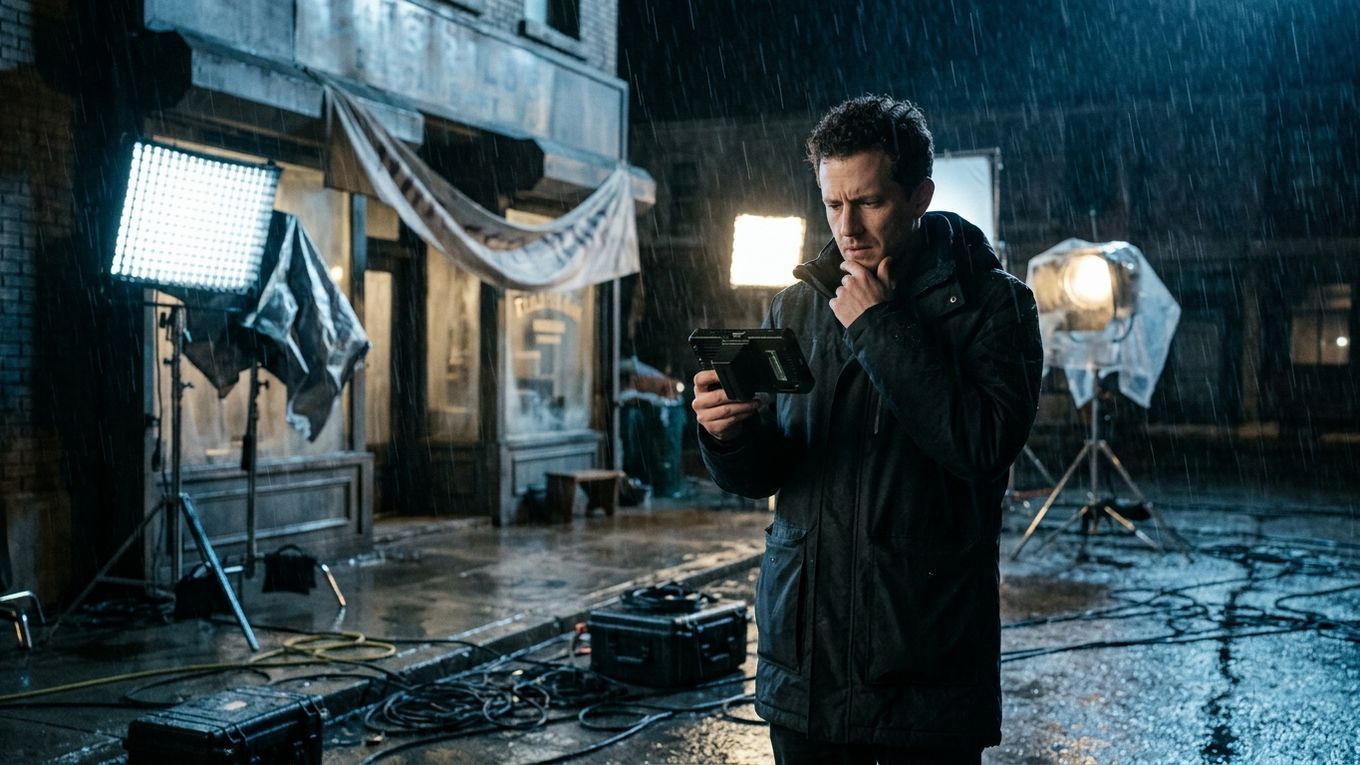
Good prep is not about being precious. It is about protecting judgment.
A shot list, references, templates, and pre-decisions do three things:
1. They reduce the number of live decisions on set. If you already know the lens, the angle, the blocking intention, and the emotional function of a shot, you are not burning focus on basics when you should be watching performance. 2. They turn vague taste into concrete choices. Reference frames and look boards make “I want this to feel grounded but tense” into something executable. That matters because taste is slippery under pressure. 3.
They preserve iteration tolerance. If the first pass is already structured, revisions stay local. If nothing is decided early, every revision becomes global.
That last point is crucial. Revisions are not free. The more you revise, the more you test your own memory, confidence, and consistency. After enough loops, even strong ideas start to blur. Decision-making fatigue is not a personality flaw; it is a throughput limit.
What breaks first in a one-person film pipeline
Not rendering.
Not export speed.
Decision-making.
A solo creator can usually outwork a lot of technical friction. You can wait on files, render overnight, or batch tasks. But you cannot indefinitely scale attention. Attention does not scale the way storage or compute does. Every extra choice — especially repeated choices — has a cost.
That is why the pipeline tends to crack at the points where you have to decide:
* What is the shot trying to say? * Which take is the real one? * Is this pacing issue a performance problem or an edit problem? * Do I fix the scene or keep moving? * Am I refining, or am I re-litigating?
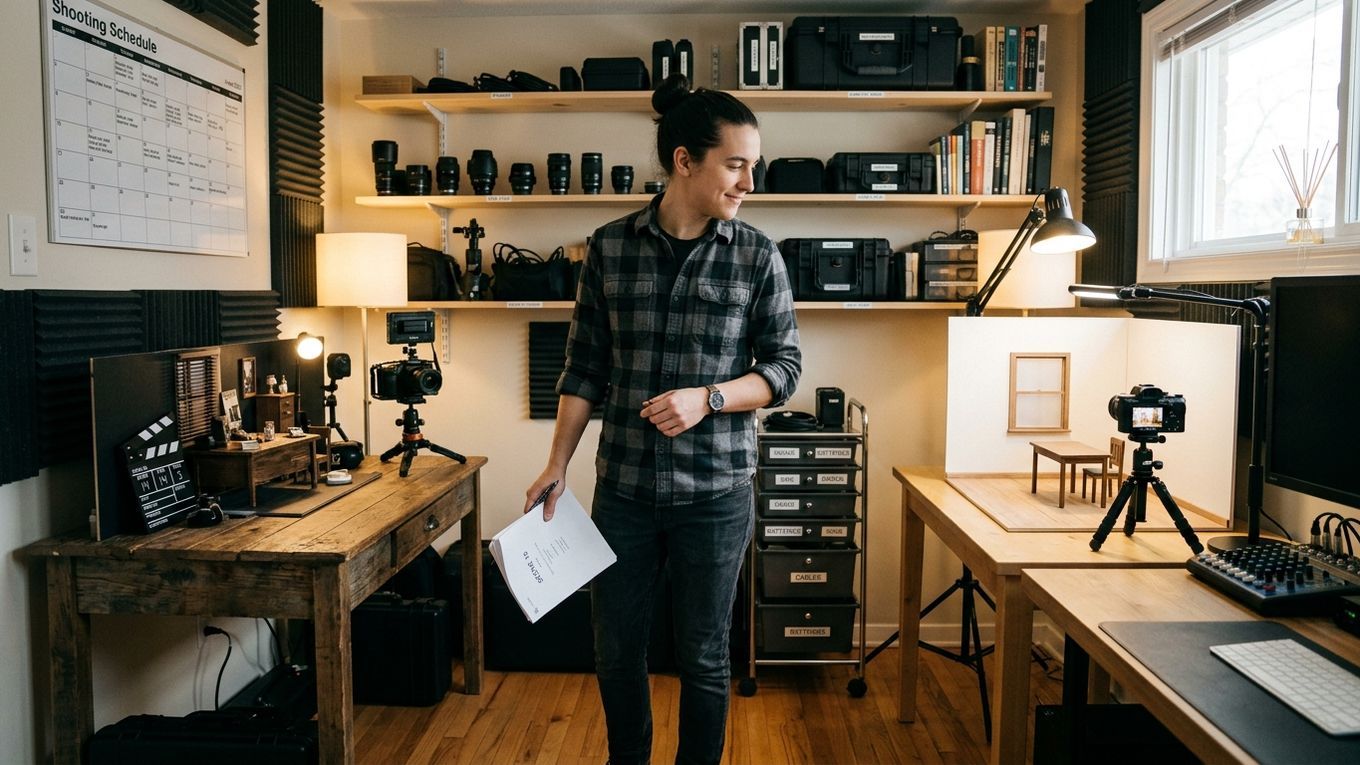
Once those questions start stacking, the work slows down even if the tools are fast.
The honest math of solo filmmaking
If you want consistency, you have to think in throughput, not aspiration.
A realistic benchmark for a solo workflow is about 1 minute of finished film per month if you are doing the full stack yourself and trying to keep quality stable. That is not a limit of talent. It is a limit of attention, revision tolerance, and the time it takes to make decisions you can still stand behind later.
A 4-minute film, then, is not “a weekend project.” It is a multi-month commitment if you want it to feel coherent.
A rough breakdown for a one-person film pipeline might look like this:
* Concept and script: 10–20% * Prep, references, shot list, templates: 20–30% * Shoot: 15–25% * Edit: 25–35% * Sound, color, finishing, revisions: 15–25%
The exact numbers change by style, but the pattern does not: the earlier you compress uncertainty, the more stable the later phases become.
Why templates matter more than inspiration
Indie creators often overvalue inspiration and undervalue repeatable structure. But if you are working alone, structure is what keeps the film from changing shape every time your energy changes.
Templates help because they move decisions out of the hot path:
* Folder structures reduce search time. * Camera reports reduce ambiguity. * Edit timelines with preset bins reduce setup friction. * Lighting diagrams and framing references reduce on-set drift. * Sound notes and naming conventions reduce post confusion.
None of that is glamorous. All of it protects the part that matters: judgment.
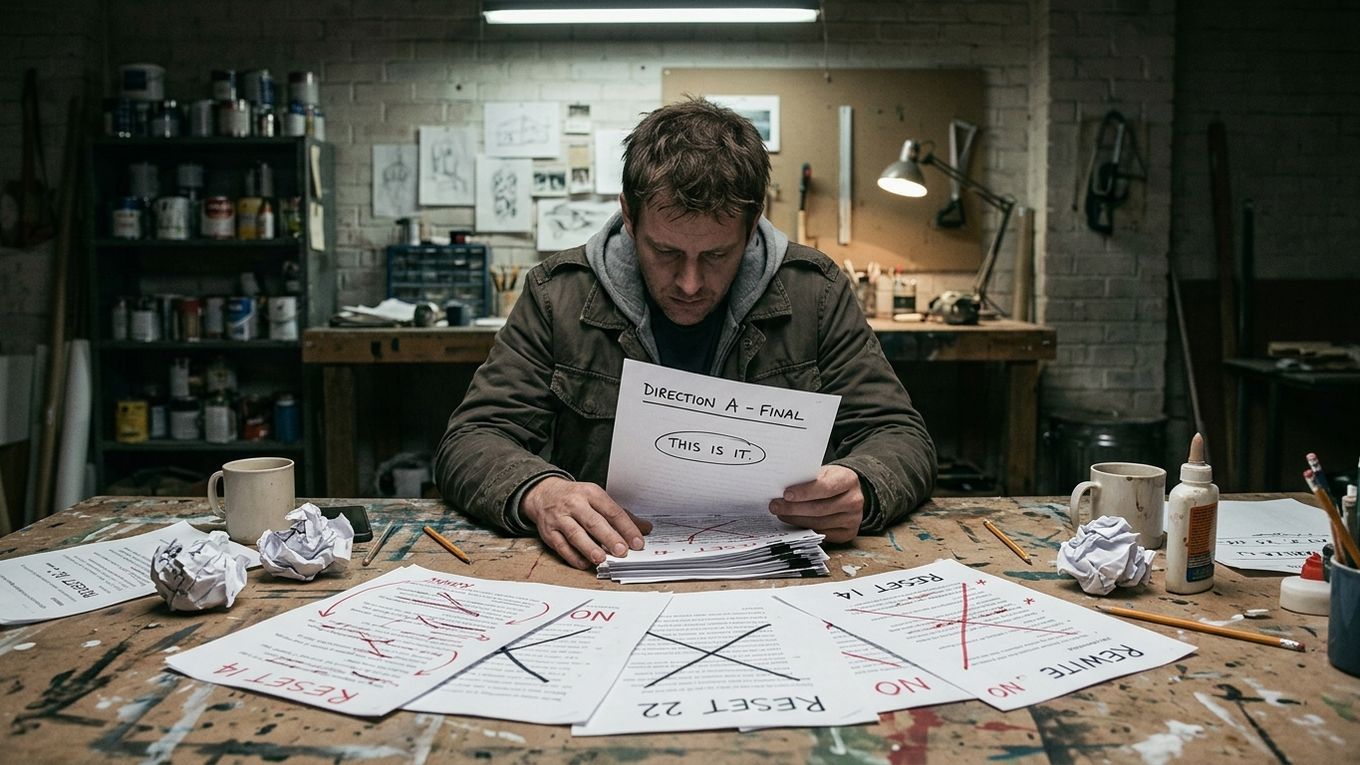
And judgment is what gets damaged first when iteration tolerance starts to drop. After enough revisions, you stop asking “what is best?” and start asking “what is easiest to tolerate?” That is how weak endings survive, how pacing gets mushy, and how the film loses its original intent.
Prep is not extra work. It is deferred failure prevention.
This is the hard truth for indie filmmakers: if prep feels excessive, it is often because you are noticing the cost of not doing it.
You can absolutely make films with minimal prep. But the bill arrives later, in the form of:
* inconsistent coverage, * bloated revision cycles, * avoidable reshoots, * fatigue-induced compromises, * and work that feels close, but not finished.
If you are trying to finish consistently without a crew, the goal is not to eliminate uncertainty. The goal is to move uncertainty into a phase where it is still cheap.
That is why prep comes first. It is the first place the one-person film pipeline proves whether it can hold. And if it cannot hold there, everything downstream gets harder.
For solo creators, the real edge is not doing more. It is deciding earlier, so you have enough mental bandwidth left to actually finish.
Where Cognitive Load Starts Compounding
The one-person film pipeline does not usually break at rendering. It breaks much earlier, when decision-making fatigue starts piling up faster than your output can absorb it.
For indie filmmakers, the real bottleneck is not technical horsepower. It is the amount of judgment required at every stage: choosing a premise, rewriting the scene, blocking the shot, resetting the audio, selecting takes, balancing music, exporting versions, fixing captions, and deciding what to leave out. Each step feels small. Together, they create a constant tax on attention.
That is why the first failure mode in a one person film pipeline is rarely a hard stop. It is a slow compression of cognitive room. You stop seeing the project fresh. You start making defensive choices. You revisit decisions because your first pass no longer feels trustworthy. And once that happens, revisions multiply.
A realistic solo workflow makes this obvious. If a finished film takes four minutes and you want one finished minute per month, you are already working under tight throughput. But the hidden cost is not just time; it is switching cost. Writing demands language and structure. Shooting demands spatial judgment and performance control. Editing demands pattern recognition. Sound demands precision. Delivery demands format awareness. None of those mindsets transfer cleanly. Every transition asks your brain to re-orient.
That is why prep matters more than most creators want to admit. Prep is not only logistical; it is cognitive compression. The more choices you settle before a shoot, the less your attention gets shredded in the moment. Without that buffer, the day becomes a chain of micro-decisions: “Should I move the light?” “Is this line playable?” “Do I grab another take?” “Was that audio clean enough?” “Do I fix it now or later?” Each question is tiny. The accumulated effect is not tiny.
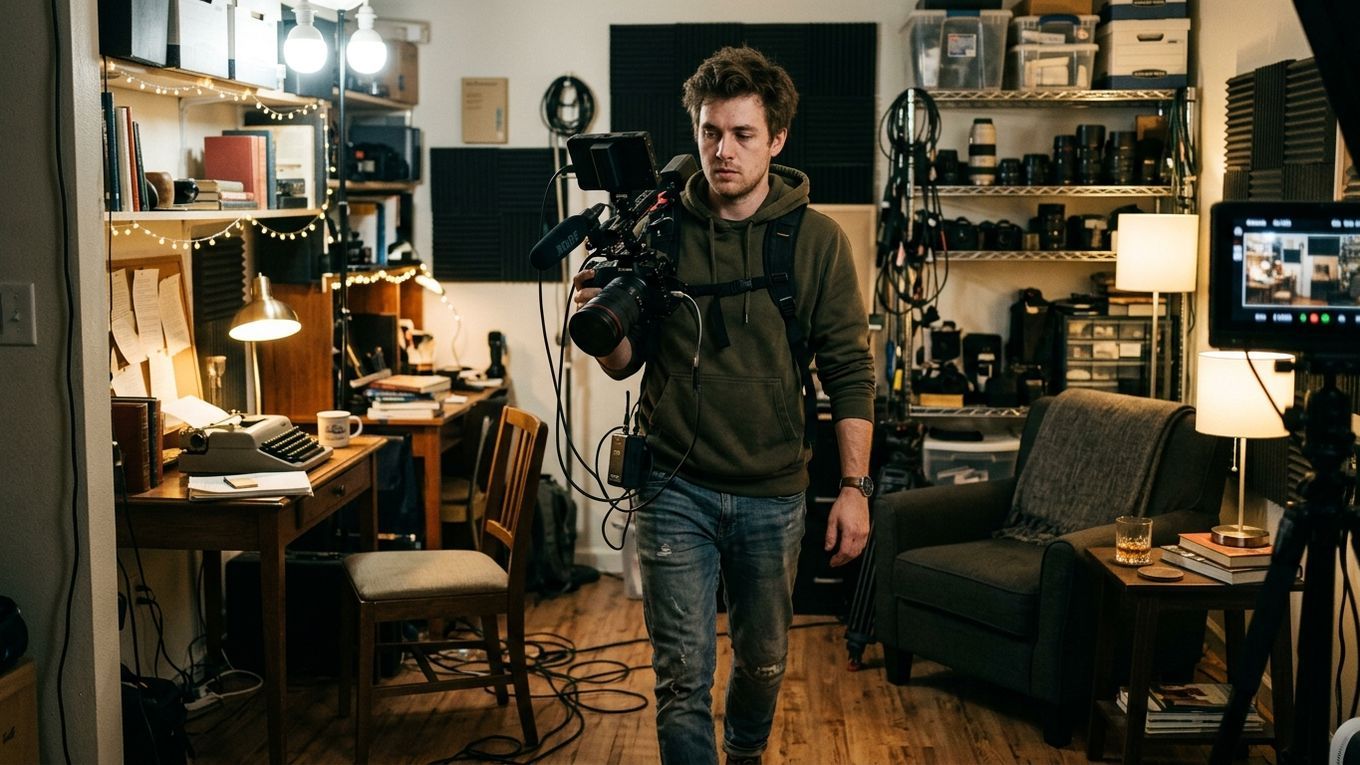
This is where iteration tolerance becomes a real limiting factor. Indie creators often assume they are fighting for more time, when they are actually fighting for the ability to revise without degrading judgment. The first revision is usually productive. The fifth revision often costs more than it improves. By then, your attention does not scale with the project anymore — it fragments.
That is also why structured tools matter. Not because they make the work glamorous, but because they reduce the number of open loops your mind has to hold at once. A good system protects judgment under iteration fatigue. It preserves what still works after the third pass. It helps you distinguish a necessary revision from an anxious one.
In practice, the pipeline does not fail all at once. It fails where cognitive load compounds: too many choices, too many resets, too many versions, too little recovery. The creator who survives is not the one who can do everything. It is the one who can keep decision quality intact long enough to finish.
Designing a Pipeline That Fails Later
If you want a one-person film pipeline to survive contact with reality, stop optimizing for elegance and start optimizing for endurance. The first thing that usually breaks is not rendering, storage, or export settings. It is judgment. For indie filmmakers and indie creators working alone, the real bottleneck is decision-making fatigue: every shot choice, framing tweak, performance note, sound choice, and revision adds cognitive load until attention stops scaling.
That is why the safest pipeline is not the one with the most options. It is the one with the fewest open loops.
A resilient solo workflow does five things well:
1. Limits open choices. Fewer style branches, fewer gear swaps, fewer “maybe later” decisions. Commit early to a visual language, a shot grammar, and a constrained toolset. The fewer unresolved choices you carry into production, the less judgment gets drained before edit. 2. Batches decisions. Don’t decide color, music direction, and pacing in the same mental session if you can avoid it. Batch prep decisions in blocks, then switch into execution mode.
The goal is to protect attention, not to be endlessly responsive. 3. Shortens feedback loops. Long gaps between action and review make it harder to learn what is actually working. A tight loop — shoot, review, adjust — keeps iteration tolerance high. When the loop stretches too far, revisions become expensive not because they are technically difficult, but because you no longer remember why the choice was made. 4. Protects prep time. Prep is where solo projects win or die.
Storyboards, shot lists, asset naming, scene ordering, and sound references are not administrative overhead; they are load-bearing structure. If prep gets sacrificed, the pipeline becomes a sequence of emergency decisions under stress. 5. Reduces revisions where possible. Revisions are not free learning; they are compounding cognitive load. Build enough clarity upstream that later changes are small and specific. The aim is not zero revision.
The aim is fewer broad rethinks that force you to re-evaluate everything at once.
That is also why throughput for a solo filmmaker has to be measured honestly. A realistic target might look like one finished minute per month for a full-stack, quality-focused workflow. In narrow, highly templated formats, some indie creators may move faster — but that is the exception, not the baseline.
The point is not to chase a heroic pace. The point is to set a sustainable one. If your process only works when you are fresh, lucky, and overcommitted, it does not really work.
The better question is not, “How much can I produce if I push harder?”
It is: How many meaningful decisions can I make before quality starts to collapse?
If the answer is “not many,” then the pipeline is telling you something useful: narrow the scope, protect the standards, and design for endurance. In solo filmmaking, that is how you fail later — and finish more often.