The Myth of Democratization
The loudest promise around AI filmmaking is that “anyone can make a movie now.” Technically, that’s true in a narrow sense: anyone can generate an image, a shot, a voice, or even a rough scene with an AI image generator or Google Gemini AI. But generating content is not the same thing as directing a film.
That gap is the whole story.
Filmmaking has never been only about access to tools. It has always been about judgment: what to show, what to cut, what to repeat, what to hide, and how each piece fits into a coherent emotional arc. AI has lowered the friction of production, but it has not automatically distributed taste, narrative discipline, or creative direction. It gives more people access to outputs, while real authorship still sits with the people who can orchestrate those outputs into something watchable.
That’s why the strongest early wins in AI filmmaking are not coming from random users churning out clips. They’re coming from experienced filmmakers, production companies, and operators who understand the workflow as a whole. The difference is not tool access. The difference is systems design.
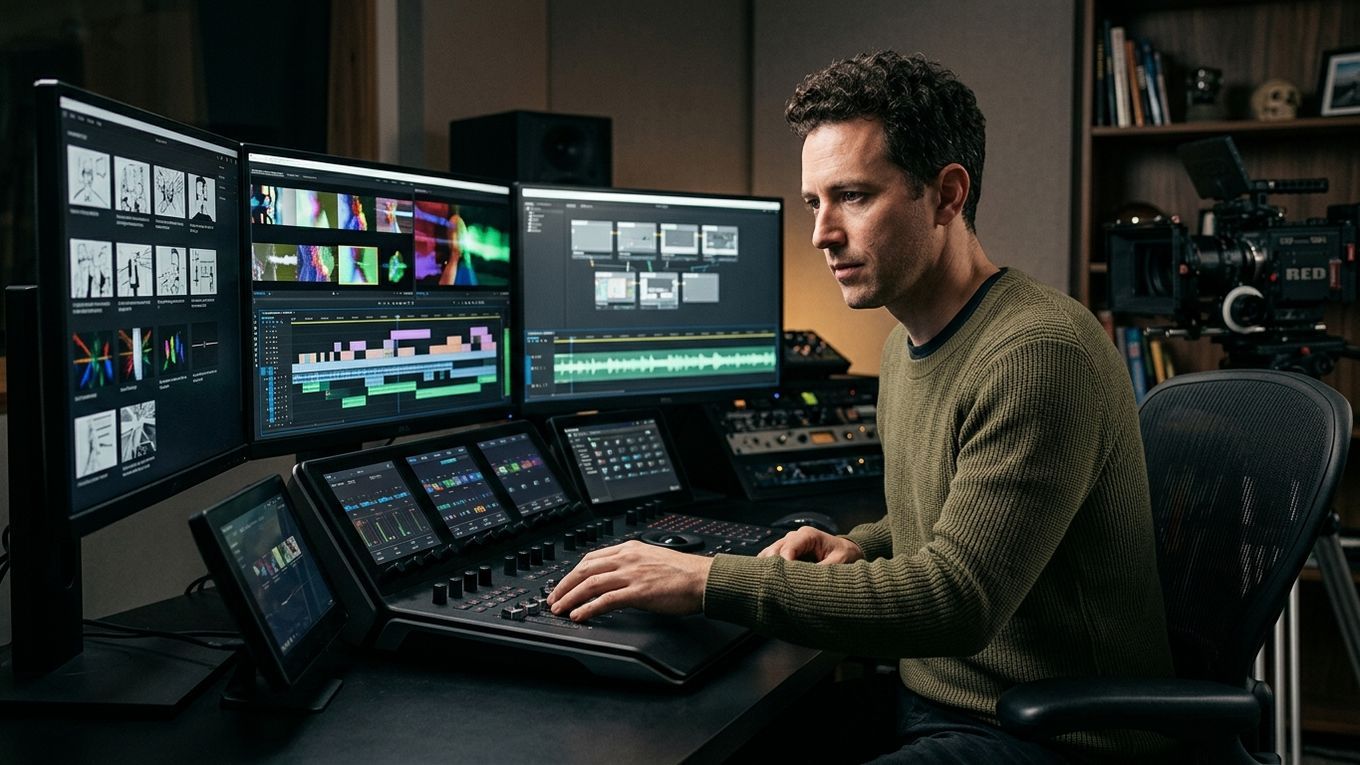
Traditional film production was gated by capital, crew, locations, gear, and post-production labor. AI removed a lot of that friction. But it replaced the old barriers with a new one: the ability to make work that actually feels directed. That means coordinating prompts, assets, timelines, continuity, iteration, feedback loops, and editorial decisions across multiple tools. In other words, filmmaking is becoming a form of systems design.
The best proof is not theoretical. A 4-minute AI film completed in 4 weeks shows what happens when the system is designed well: execution gets dramatically faster because the workflow is intentional. But speed alone is not democratization. It’s leverage.
And leverage flows uphill.
The people who benefit most from AI right now are the ones who already have taste, brand, distribution, and the ability to make decisions under uncertainty. Top creators and studios can do more, faster, and with more iteration. They can test more options, kill weak ideas sooner, and refine stronger ones with less waste. AI doesn’t flatten that advantage; it amplifies it.
That’s also why the contrast matters between a casual user of an AI image generator and a seasoned filmmaker building a believable cinematic experience. One can produce outputs. The other can make a film. The first solves generation. The second solves meaning, continuity, and audience trust.
Biome Brigade is the concrete example of this shift. What matters is not that a single tool can generate a shot. What matters is that the whole pipeline can be orchestrated into a film-ready process. That’s the wedge. The real advantage in indie filmmaking and film production is no longer just access to generative tools; it’s the system layer that turns those tools into a repeatable creative engine.
This is where Ciaro Pro fits: as the orchestration layer that connects the tools into a coherent pipeline, so creators can move from isolated outputs to directed work.
So no, AI didn’t democratize filmmaking in the way people hoped. It democratized input. It centralized output. And the real power now sits with the people who know how to direct the machine, not just use it.
Why the 4-Minute-in-4-Weeks Example Matters
The clearest way to understand what AI has done to filmmaking is this: it made it easy to generate content, but it did not make it easy to direct a film.
That gap matters. Anyone can open an AI image generator or experiment with Google Gemini AI and get something that looks cinematic for a moment. Very few people can turn those outputs into a coherent scene, maintain continuity, shape pacing, and make the final work feel intentional. That is the real divide in modern AI filmmaking.
The 4-minute AI film completed in 4 weeks is important because it proves something more useful than novelty. It shows that when the system is designed well, execution speed improves dramatically. Not because the tool is magic, but because the workflow is orchestrated.
That distinction is everything.
Traditional film production was slowed down by capital, crew, locations, logistics, and post-production labor. AI removes some of those barriers, but it introduces a new one: can you actually make the result feel directed? Can you coordinate prompts, assets, timelines, continuity, iterations, and feedback into something that plays like a finished film?
That is why access does not equal capability.
A lot of people now have access to the inputs. Far fewer have the taste, judgment, and structure to turn those inputs into something watchable. In other words, AI did not democratize filmmaking in the way people hoped. It widened access while concentrating real power in creative direction and systems orchestration.
The best proof is practical, not theoretical. Biome Brigade is a good example of what happens when the process is designed as a system rather than a pile of tools. The value was not “we used AI.” The value was that the team knew how to sequence tools, manage iteration, and keep the output aligned with a single creative vision. That is the wedge. Orchestration beats tool novelty every time.
And that is why top creators benefit first.
The directors, studios, and operators who already have brand, taste, and distribution can do more, faster, with more iteration. They can test more ideas, refine more quickly, and ship more polished work. AI amplifies existing advantage because strong direction compounds across every stage of the pipeline. A great filmmaker with AI is not just slightly faster. They are structurally more capable.
So who actually benefits from AI right now?
* Top creators who can translate taste into process * Production companies that can build repeatable pipelines * Indie filmmaking teams that know how to coordinate tools instead of chasing them * Studios that can absorb AI into existing infrastructure * Operators who understand that filmmaking is becoming systems design
That last point is the real shift. Filmmaking is no longer only about who can shoot, edit, or render. It is about who can design the workflow that makes those outputs feel unified. In that sense, the future of AI filmmaking is less about the individual prompt and more about the operating system behind the prompt.
That is why a 4-minute film in 4 weeks matters. It is not a proof that AI makes everyone a filmmaker. It is a proof that AI makes good systems faster — and that the people who already know how to direct will get the biggest advantage.
If that is where the industry is heading, then the missing layer is obvious: the system that turns scattered AI outputs into a film-ready pipeline. That is the space Ciaro Pro is built for — not as another tool, but as the orchestration layer that helps teams direct AI instead of merely generating with it.
Access vs Capability
An AI image generator can put a scene on your screen in seconds. Google Gemini AI can help you brainstorm, rewrite, or remix an idea just as fast. But speed is not the same thing as filmmaking.
That gap is the real story. Anyone can generate an image, a shot idea, or even a fragment of dialogue. Very few people can turn those fragments into a believable cinematic experience with rhythm, continuity, emotional arc, visual consistency, and intentional direction. That’s why AI hasn’t democratized filmmaking in the way people expected. It has democratized access to inputs while centralizing the real power in the hands of people who understand creative direction, judgment, and systems design.
Traditional film production had obvious barriers: capital, crew, locations, lighting, post-production labor, and time. AI reduces some of those. A small team can now prototype faster, iterate cheaper, and explore ideas that used to require a full set. But a new barrier quickly appears: can you make it feel directed?
That’s where most users hit the wall. The average person can prompt outputs, but they can’t yet coordinate prompts, assets, timelines, continuity, camera language, and feedback loops across multiple tools. Filmmaking AI is not just about producing content; it is about orchestration. And orchestration is a skill.
The best proof is the 4-minute AI film completed in 4 weeks. That result matters because it shows what happens when the system is designed well. The speed didn’t come from one magical model. It came from a filmmaker or production team that knew how to organize the workflow, choose the right outputs, and keep the project coherent from scene to scene. In other words, execution improved because the system was built around direction, not around the tool itself.
That is also why Biome Brigade matters as a concrete example. It proves the wedge in AI filmmaking is not “who has access to the tool,” but who can combine tools into something that feels like a real film. The advantage sits with the creator who can align concept, visuals, motion, pacing, and revision into a single coherent pipeline. The tool creates pieces; the operator creates the experience.
So who actually benefits from AI right now? Not the average user experimenting with a prompt box. The biggest gains go to top creators, studios, and operators who already have taste, brand, and distribution. They can do more, faster, and with more iteration. They can test more ideas, refine more aggressively, and move from concept to output with fewer bottlenecks. AI doesn’t flatten the market; it amplifies the people who already know how to direct it.
That’s the uncomfortable truth for indie filmmaking and for production companies alike: access has widened, but capability has concentrated. AI gives everyone a camera, but it does not give everyone a directing eye.
This is why the future of film production looks less like “anyone can make a movie” and more like “the best systems win.” The winning team will be the one that understands how to turn a stack of AI outputs into a film-ready pipeline — fast, repeatable, and controlled.
That is the missing layer Ciaro Pro is built to provide: not another isolated tool, but the system layer that orchestrates filmmaking AI into something usable, coherent, and production-ready.
Filmmaking Is a Systems Design Problem
The biggest myth around AI filmmaking is that if everyone can generate something, everyone can make a film.
They can’t.
What AI has actually done is widen access to inputs while concentrating real power in the hands of people who can direct outputs into a coherent whole. Generating a shot with an AI image generator or a scene through Google Gemini AI is easy compared with the hard work of building continuity, pacing, tone, character consistency, and narrative intent across an entire film. In other words: the barrier is no longer “can you make assets?” The barrier is “can you orchestrate them?”
That is why filmmaking AI is becoming a systems problem.
Traditional film production was constrained by capital, crew size, locations, equipment, and post-production labor. Those barriers are still real, but AI moved the bottleneck upstream. Now the scarce skill is creative direction: knowing what to ask for, what to keep, what to discard, and how to make dozens or hundreds of generated pieces feel like they belong to the same authored work. A lot of people can prompt. Very few can direct.
That difference matters because film is not a pile of media files. It is a decision system.
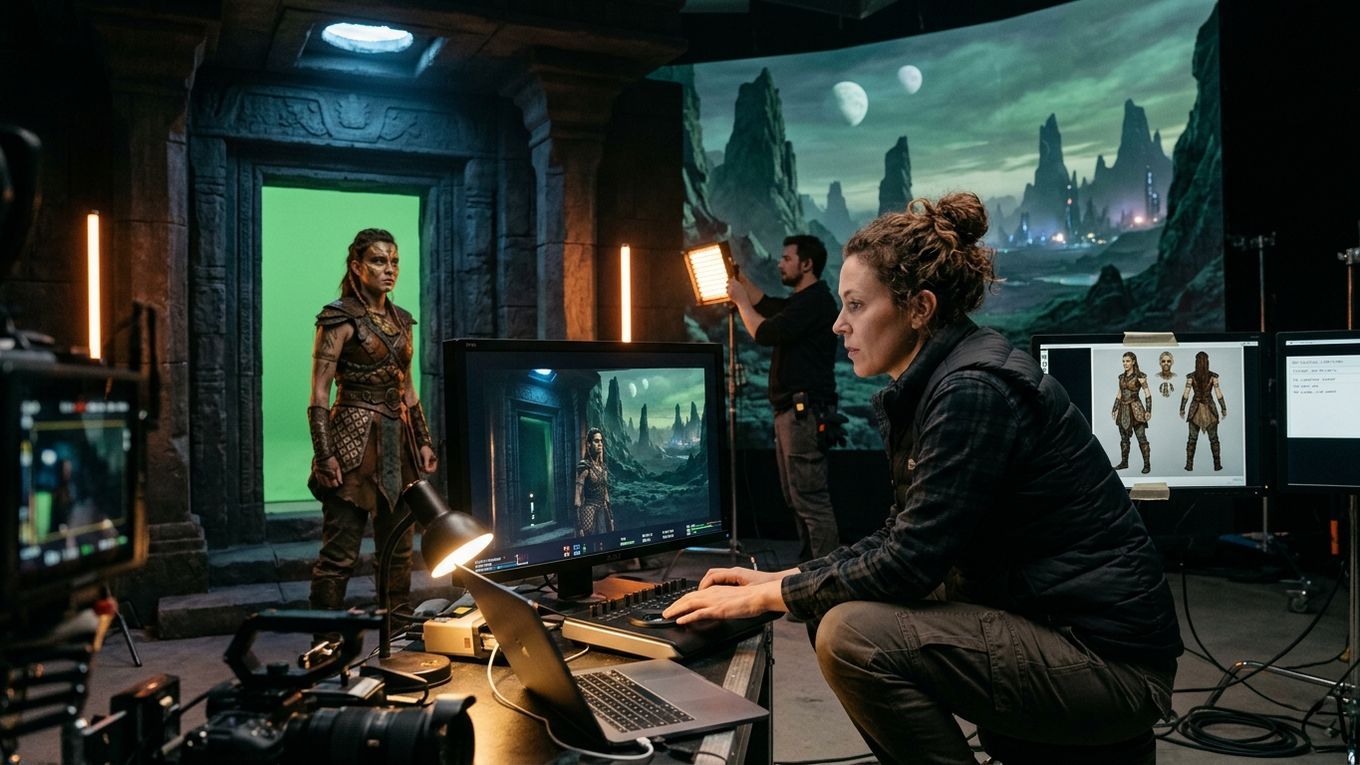
A useful way to think about AI filmmaking is as coordination across:
* prompts * assets * timelines * continuity * iteration * feedback loops
If one of those breaks, the illusion breaks.
A character’s face shifts between shots. A scene’s lighting changes without reason. A prop disappears. The emotional rhythm collapses. The result may still look “AI-made,” but it doesn’t feel directed. That is the new standard: not whether the individual clip is impressive, but whether the whole experience holds together.
This is why the 4-minute-in-4-weeks example matters. A 4-minute AI film completed in 4 weeks is not proof that anyone can now make cinema. It is proof that when the system is designed well, execution speed improves dramatically. The win was not the tool alone. The win was the workflow: planning, sequencing, controlling variation, iterating quickly, and using feedback to tighten the result.
That distinction is the whole story.
In practice, the best indie filmmaking teams are not just “using AI.” They are building production systems around it. They treat AI filmmaking like a controlled pipeline, not a random output machine. They manage continuity across scenes, keep visual language consistent, and use iteration to move from interesting fragments to a finished piece with intent. That is where production companies and serious operators get leverage: not from producing more content, but from directing better systems.
Biome Brigade is a good example of this. What makes it compelling is not that it proves one model, one generator, or one workflow is magic. It proves the opposite. It shows that orchestration is the wedge. The project only works when prompts, design, animation, pacing, and revision are coordinated into a film-ready pipeline. Without that system layer, you get outputs. With it, you get a directed work.
That is the real divide in modern film production.
On one side are users of an AI image generator or a chat-based creative tool who can create isolated pieces quickly. On the other side are filmmakers who understand creative direction well enough to combine those pieces into something believable, emotional, and structurally sound. Access to generation is broad. Capability to direct is not.
So did AI democratize filmmaking?
Not really. It democratized participation in the input layer. But the output layer — the layer that actually matters — became more centralized around taste, judgment, and systems design.
That is why top creators gain the most from AI right now. Experienced directors can iterate faster. Studios can prototype more aggressively. Strong creative direction becomes even more valuable because the person with taste can explore more options, reject faster, and converge sooner. AI amplifies existing advantage because the best filmmakers already know what good looks like.
In that sense, AI has not flattened the market. It has made the gap between access and capability more visible.
And that is exactly why the winners are likely to be the people and teams who already understand story, brand, pacing, and distribution: filmmakers who can direct systems, not just generate assets.
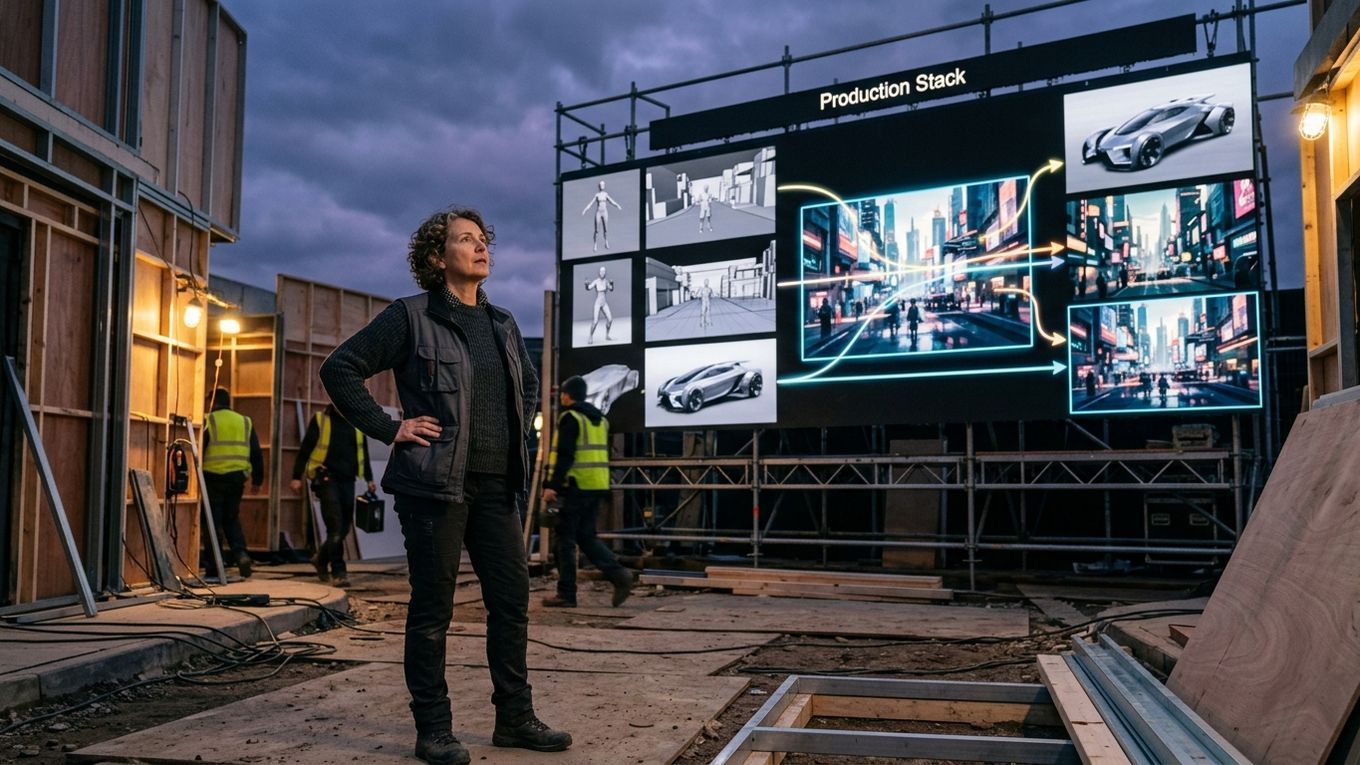
For indie filmmaking, that is both the opportunity and the warning. The opportunity is speed. The warning is that speed without orchestration produces noise. If you want AI to help you make a film, you don’t just need tools. You need the missing system layer that makes those tools behave like a production stack.
That is the wedge for Ciaro Pro: not another generator, but the orchestration layer that turns scattered outputs into a film-ready pipeline.
Because in modern filmmaking AI, the hard part is no longer making things.
It’s making them belong together.
Who Actually Benefits
The first myth about AI filmmaking is that it “puts the tools in everyone’s hands.” In a narrow sense, that’s true. Anyone can open an AI image generator, prompt Google Gemini AI, and produce something that looks cinematic for a few seconds. But filmmaking has never been about generating isolated frames. It’s about making choices that hold together over time: shot logic, pacing, continuity, emotional beats, visual grammar, and performance. That is where the real power still lives.
AI widened access to inputs. It did not democratize the ability to direct a coherent film.
That distinction matters because the bottleneck in AI filmmaking is no longer just capital, crew size, or access to cameras. Those old barriers still matter, but they’ve been partially compressed. The new barrier is judgment: the ability to turn outputs into a believable, intentional experience. In other words, filmmaking is increasingly becoming a systems design problem. The winners are not the people who can produce the most images.
They are the people who can coordinate prompts, assets, timelines, continuity, iteration, and feedback into something that feels authored.
The best proof is execution, not theory. A 4-minute AI film completed in 4 weeks shows what happens when the system is designed well. The speed gain is real, but it didn’t come from a random user pressing generate. It came from structure: a clear creative direction, repeatable workflows, fast iteration, and a person or team capable of making hard calls about what to keep and what to discard. That’s the real story of modern film production.
AI doesn’t remove the need for direction; it makes direction more valuable.
That’s why the biggest beneficiaries right now are not casual users. They’re the people who already understand how to make images mean something:
* top creators with a strong visual point of view * production companies with distribution and workflow muscle * indie filmmaking teams with taste and speed * studios and operators who can build repeatable creative systems
AI amplifies existing advantage because the best directors can do more, faster, and with more iteration. If you already know how to shape rhythm, maintain continuity, and sell a feeling, AI gives you more leverage. If you don’t, it just gives you more raw material.
This is why access ≠ capability. A user of an AI image generator can create a striking still. A filmmaker can combine dozens of such outputs into a scene that feels alive, controlled, and believable. The difference is not the tool. It’s the ability to exercise taste, judgment, and direction across a chain of decisions. That gap is why most people can generate content, but very few can actually direct a film.
For indie filmmaking, this changes the economics of who can compete, but not in the simplistic “everyone is equal now” sense. It favors teams that can move quickly without losing coherence. It rewards creative leads who can test ideas fast and reject weak ones even faster. And it disproportionately helps production companies that already have a brand, audience trust, and a distribution channel. If you can sell the vision and deliver consistently, AI becomes a force multiplier.
If you can’t, it just adds noise.
That’s also where Biome Brigade matters as a concrete example. The point of that project is not that one tool made a film. The point is that orchestration made the film possible. It proves the wedge is not “which model is best.” The wedge is whether someone can build a film-ready pipeline across models, assets, revisions, and feedback loops. In practice, that’s what separates a hobbyist from a production-ready creative operation.
This is also why the current AI era is favoring production companies and experienced creative operators more than solo prompt users. The companies that win will be the ones that treat AI like infrastructure: a system layer that compresses labor, accelerates experimentation, and increases output without sacrificing taste. The ones that lose will be the teams that assume a better model automatically creates better storytelling.
So who actually benefits from AI right now? The answer is blunt: people with taste, brand, and distribution. People who understand creative direction. People who can orchestrate a team of tools the way a seasoned director orchestrates a crew. AI didn’t flatten the hierarchy of filmmaking. It made the hierarchy more visible.
That’s why the real opportunity is not just using tools. It’s building the operating layer around them. For teams that want to turn filmmaking AI into repeatable output, the advantage comes from system design — and that’s exactly where Ciaro Pro fits, as the missing layer that orchestrates tools into a film-ready pipeline.
Biome Brigade as the Proof Point
The easiest way to misunderstand AI filmmaking is to confuse generation with direction.
Yes, an AI image generator can make something that looks cinematic. Yes, Google Gemini AI can help sketch ideas faster than a traditional pre-production team. But that’s not the same as making a film. A film is not a pile of outputs — it’s a sequence of choices that holds together across time, tone, continuity, pacing, and emotional intent.
That gap is exactly why AI didn’t democratize filmmaking in the way people hoped. It widened access to content creation, but it centralized real power in the hands of the people who can orchestrate systems: directors, producers, creative leads, and operators with taste.
Biome Brigade is the proof point.
A 4-minute AI film completed in 4 weeks sounds impressive because it is. But the important part is not that the tools were fast. It’s that the system was designed well enough to turn raw AI outputs into a coherent final piece. The win wasn’t “we used AI.” The win was “we built a workflow that could actually direct AI.”
That distinction matters.
Traditional film production was constrained by capital, crew size, location access, and post-production labor. AI reduced some of those barriers. But it replaced them with a new one: can you produce something that feels deliberately made? Can you maintain character consistency, visual language, scene-to-scene continuity, and editorial rhythm across multiple tools and many iterations?
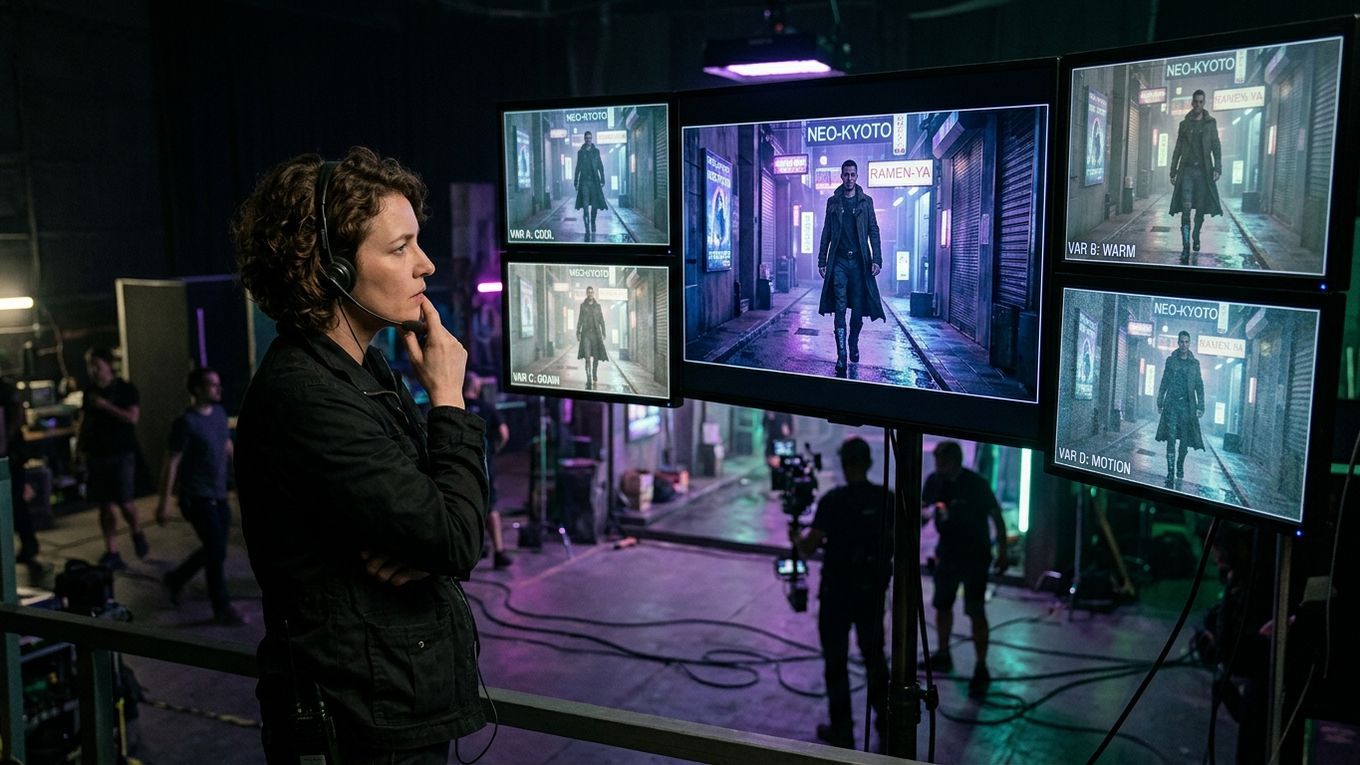
That is not an input problem. That is a systems design problem.
Filmmaking AI now behaves less like a magic button and more like an operating environment. You have to coordinate prompts, assets, timelines, feedback loops, revisions, and continuity decisions. If those pieces are not connected, the output feels random no matter how powerful the model is. If they are connected, even small teams can move with surprising speed.
Biome Brigade shows that clearly. The project is not evidence that individual tools are enough. It is evidence that orchestration is the real wedge.
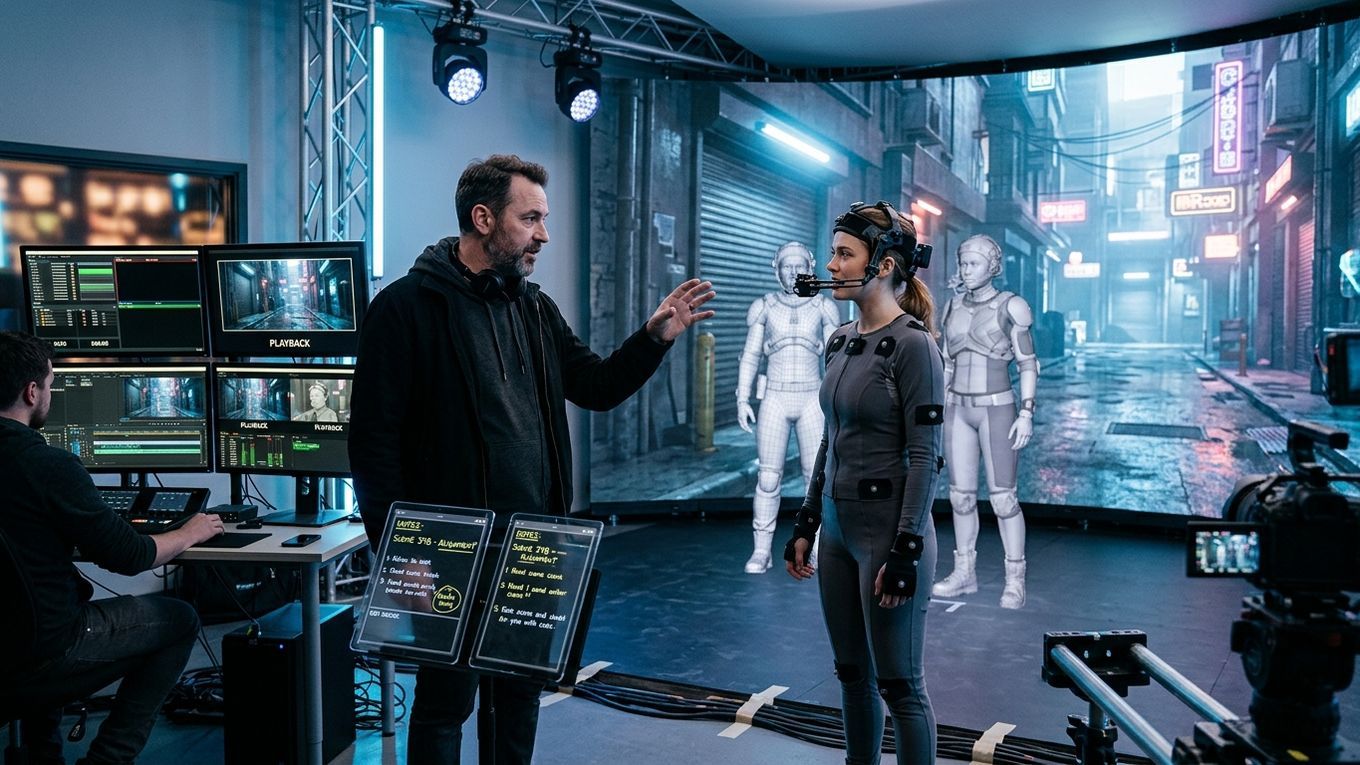
That shift is also increasing demand for structured previsualization and storyboard workflows that can keep AI-generated scenes aligned across production stages.
That’s also why the old democratization story misses the point. Access has gone up. Capability has not gone up evenly.
A solo creator with an AI image generator can produce compelling frames. An experienced filmmaker can combine those frames into a believable cinematic experience. One person can generate content. Very few people can direct a film.
And that’s where taste enters the picture. Taste is not a soft nice-to-have; it is the control system. It decides what to keep, what to cut, when to iterate, when to simplify, and when a scene finally feels right. In AI filmmaking, taste is what separates “cool demo” from “watchable film.”
So who benefits most from AI right now?
Not everyone equally. The biggest gains go to people who can turn tools into a process: creators with a strong point of view, teams with distribution, and operators who can keep a project coherent across many moving parts. That is the real advantage in film production today.
If you want the short version, it’s this: AI lowered the cost of making fragments. It did not lower the cost of making meaning.
And that is why Ciaro Pro exists: to help teams connect those fragments into a film-ready system.