An ai story generator can improve a scene you should not board
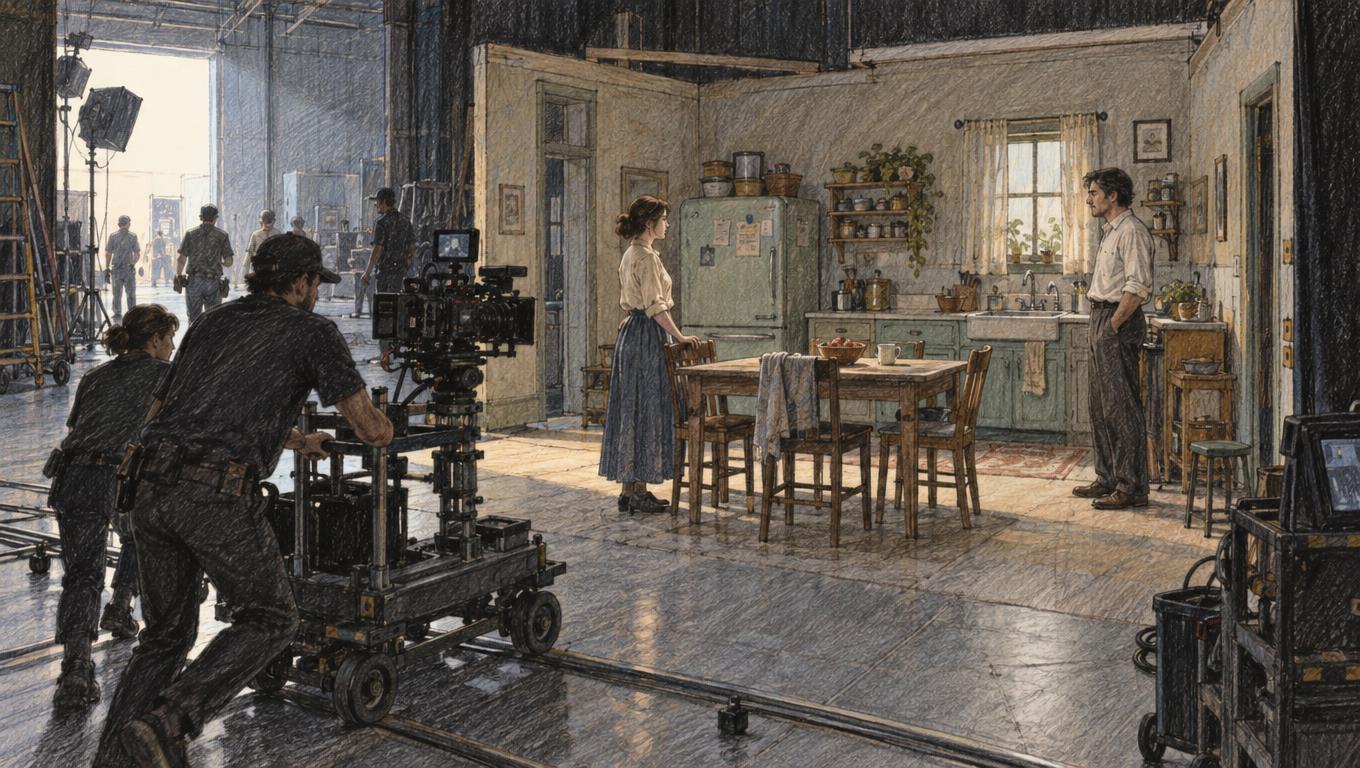
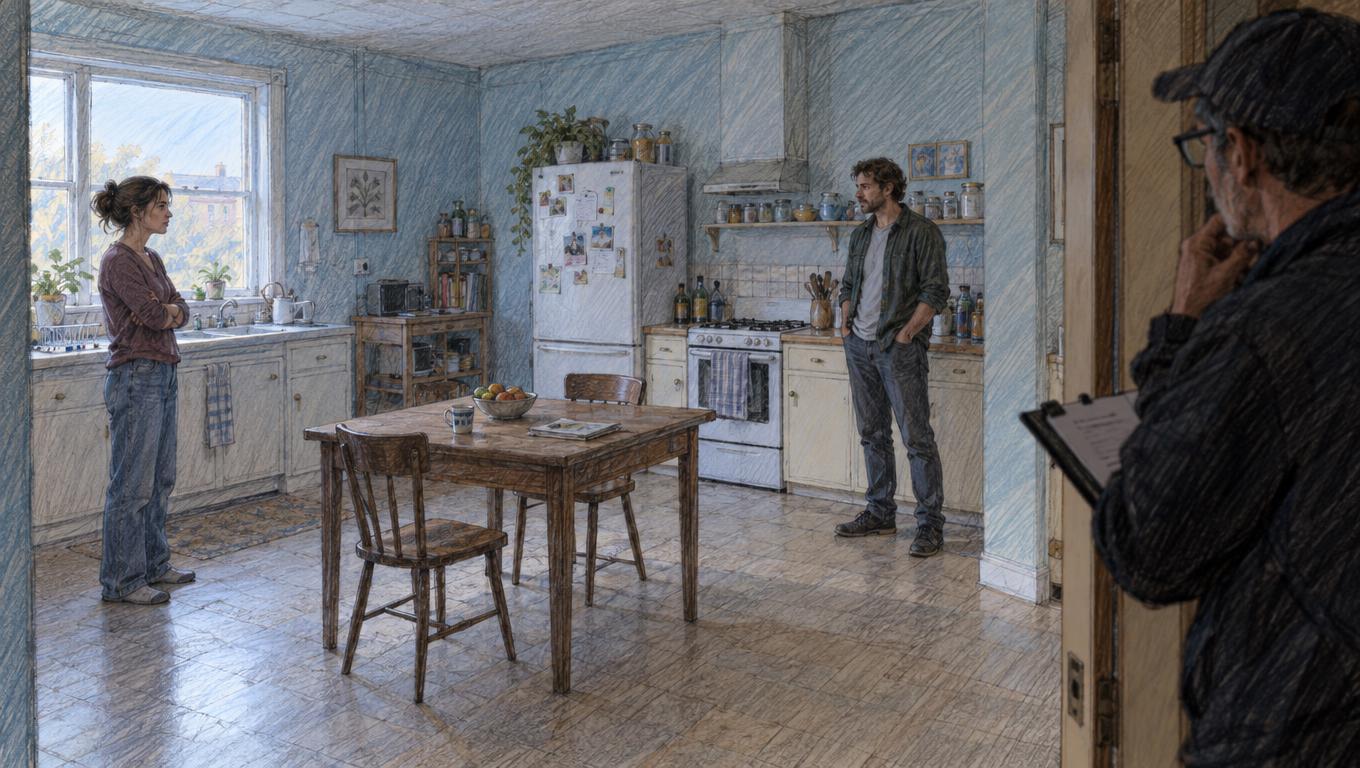
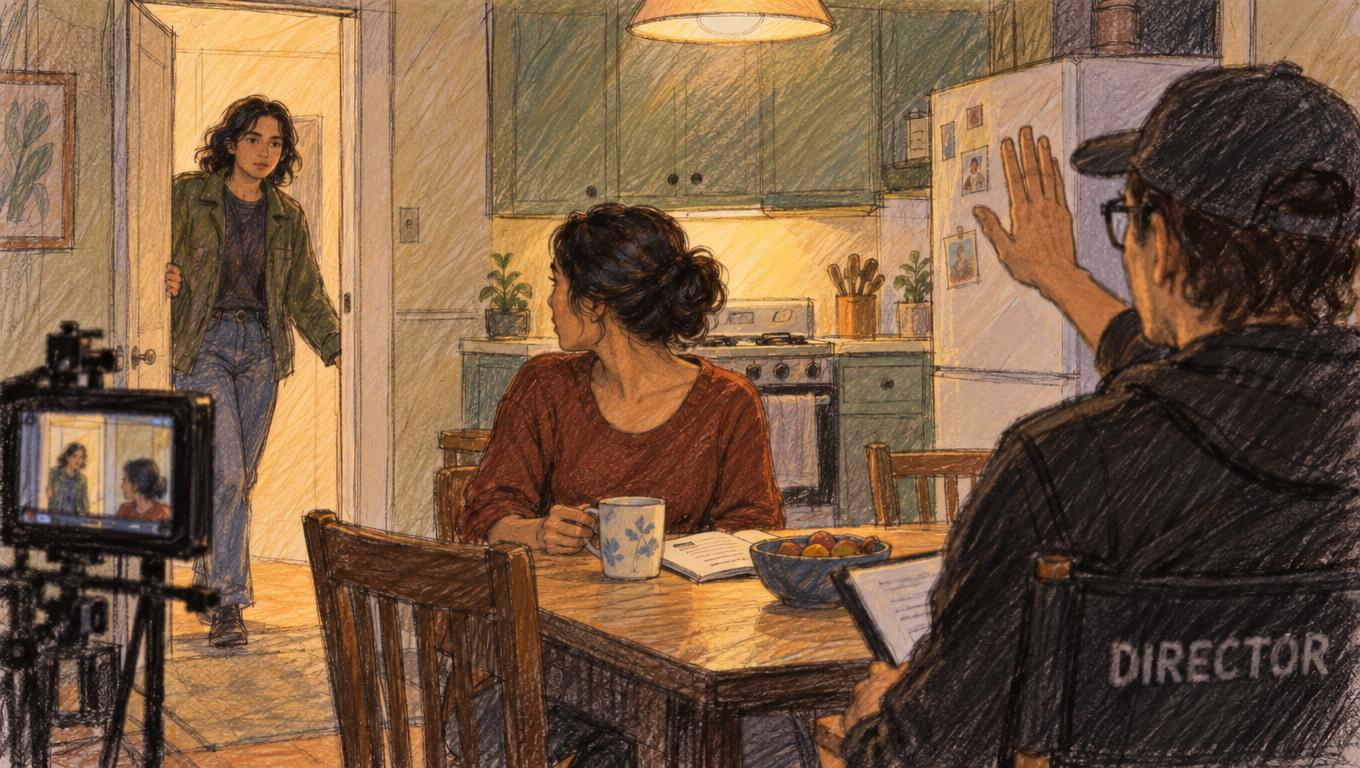
Tomas and Leena confront each other in an existing kitchen. Tomas destroyed footage of a crash. By the end of the scene, Leena must learn what he did and choose whether to report him. A public admission on a crowded street might make the truth feel explosive. It would also add a location, witnesses and a question for every later scene: who else now knows?
This is an illustrative production problem, not a customer case. The choice is not which generated version reads best. It is which version gives Leena a consequential decision that the team can make clear on screen and sustain through the rest of the film.
Fix the scene’s job, then allow marked exceptions
Before generating alternatives, record the assignment: Leena enters unaware that Tomas destroyed the footage; she leaves knowing it, having made a visible choice about reporting him. Tomas cannot undo the destruction. The kitchen and two-person cast are current production locks, not merely stylistic preferences. If the team wants to challenge either lock, it must review the added work before approving the beat.
A useful request separates compliant options from exceptions:
Propose two beat-level versions in the kitchen with Tomas and Leena only. Preserve their entry knowledge and give Leena a visible decision about reporting him. Do not write polished dialogue. You may also propose up to two exceptions that add a character or location, but label each broken constraint and explain what dramatic gain the constrained versions cannot deliver. For every option, identify the reveal, Leena’s decision, and any new prop, shot or continuity dependency.
That wording gives the team alternatives it can compare without quietly treating a new exterior as free. If the required character change is still unclear, settle it with a scene-work test before asking for more versions.
Compare the gain with the work each beat creates
Assume Leena can submit a report from her phone. In each version below, she learns what Tomas did and sends it. What differs is who witnesses the reveal, what convinces her, and what the production must carry forward. These are qualitative judgments, not budget estimates.
| Beat path | Dramatic purpose and new information | Leena’s decision | Added location, cast or assets | Coverage or animation demands | Continuity and review burden | Director–producer decision |
|---|---|---|---|---|---|---|
| Kitchen admission: Leena confronts Tomas with a deletion receipt; he admits destroying the footage. | Leena’s evidence forces Tomas to stop denying it. The audience learns she came prepared. | She sends the report while Tomas watches. | Existing cast and location; a readable receipt and phone state. | Establish when Tomas sees the receipt; hold both reactions and the send action clearly enough to cut the turn. | Match the receipt, phone and hand positions. Review the receipt’s wording and what the next scene assumes Tomas knows. Comparatively contained, but not risk-free. | Default if the intended turn is Leena taking control in private. |
| Witness in the kitchen: a third person says they saw Tomas destroy the footage. | Independent testimony gives Leena a reason to believe the accusation without finding a document. | She reports Tomas despite his objection. | New performer or character asset, blocking and reference material. | Stage the entrance and three-way eyelines without reducing the witness to an exposition delivery. | The witness now knows Leena reported him. Casting or asset, performance and story approvals expand. | Keep only if independent testimony matters more than the two-person confrontation. |
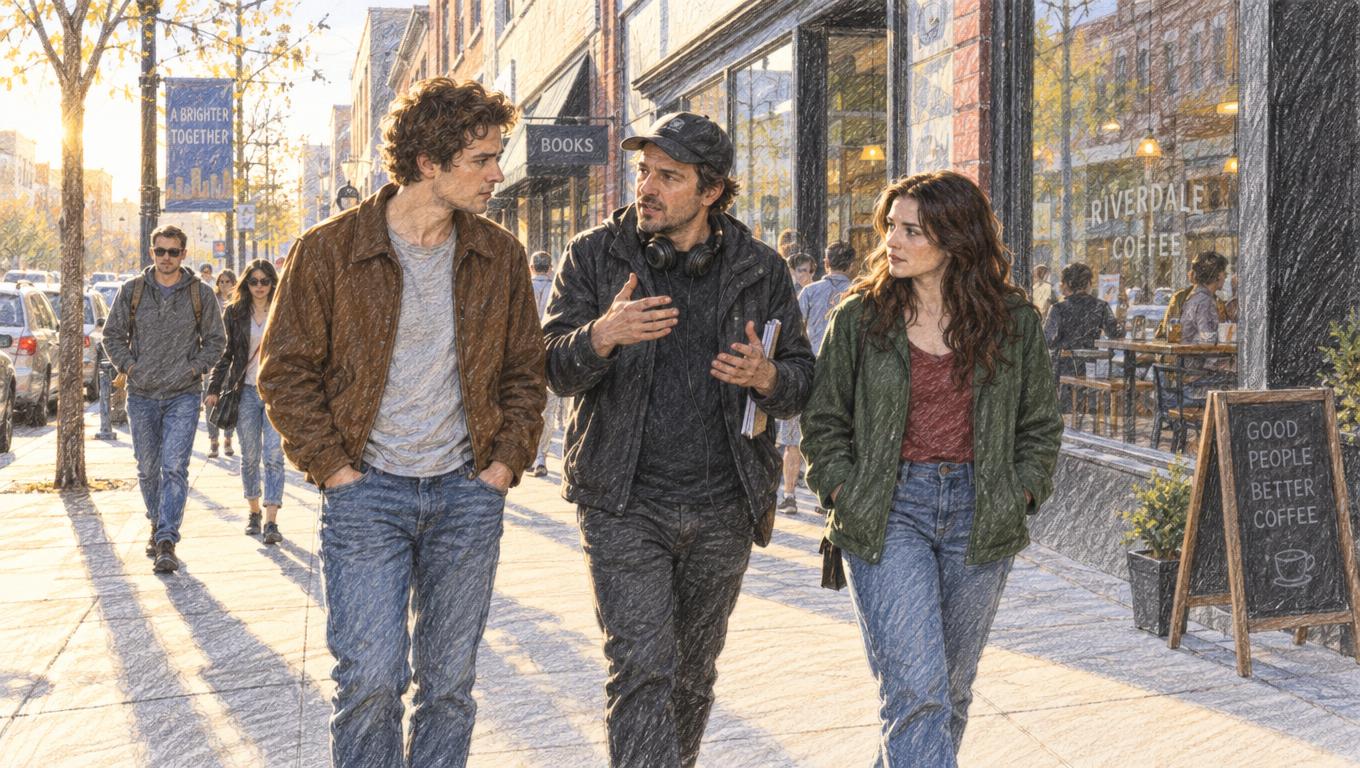
| Street admission: Tomas lets slip what he did during an argument in front of others. | Public exposure makes the consequences immediate. | Leena chooses to report him herself, rather than letting the crowd make the decision for her. | New exterior and background performers or crowd assets. | Establish who heard the admission and give Leena room for a readable choice amid reactions. | Witnesses retain that knowledge; location, crowd and shot approvals widen. Highest qualitative coordination burden of these options. | Reject unless public exposure is essential to the film’s larger turn and the added work is approved. |
The exceptions are not automatically worse. They need to deliver something the kitchen version cannot. If the film requires other people to lose trust in Tomas in this scene, the street version may justify its demands. If that collapse belongs later, adding witnesses now creates continuity obligations without helping Leena’s immediate choice.
Break down the chosen beat before making finished images
Suppose the team provisionally chooses the kitchen admission. Its apparent economy depends on a receipt the audience can understand and a send action the editor can place at the right moment. The script beat should specify the sequence of knowledge: Leena produces the receipt; Tomas realises she has evidence; he admits destroying the footage; she sends the report. If she sends it before his admission, the scene makes a different claim about what prompted her decision.
The script breakdown should answer four practical questions:
- Prop state: What does the receipt actually show, and who approves its wording? It needs to establish the deletion without requiring an implausibly long insert.
- Blocking and coverage: Where are the receipt and phone when each actor sees them? Which eyelines, reactions and insert make the reveal and send action legible? Identify an alternate cut if a planned close-up does not work.
- Continuity: Which screen content and hand positions must match across shots? What must adjacent scenes assume Leena reported, and what does Tomas know she sent?
- Ownership: Who resolves an unclear receipt, an unplayable action or a changed report before the next department builds on it?
A breakdown exposes dependencies; it does not establish feasibility. In animation or AI-video work, give persistent elements such as the receipt and phone screen approved references across the shots where they recur. Tom Danon’s AI-filmmaking tutorial likewise recommends establishing consistent characters, expressions and locations before video generation. That is practitioner guidance, not a prediction of this scene’s cost or success.
Advance through gates, not straight from prompt to sequence
Approve the revised script beat first. Then use lightweight concept frames and boards tied to the scene and its assets to test the order of information, eyelines and cut points. A limited motion test is useful only if it answers a specific unresolved question—for example, whether Tomas’s recognition and Leena’s send action remain readable across the planned shots. If the boards already settle that question, do not generate motion merely to make the option feel more finished.
After the visual plan passes review, produce the shots and assemble the sequence. The editor needs the intended reveal order, usable reaction choices, the insert’s approved content and the point at which Leena’s decision becomes irreversible. An artist needs the same beat order plus the approved references and prop states. A producer needs to know which additions are authorised and which remain open.
A connected script-to-board workflow, such as Ciaro Pro’s, can keep those decisions alongside the scene; the team still has to make and approve them. Record one durable handoff: version owner, approved beat and rationale, rejected alternatives and their strongest advantages, hard constraints, open visual questions, and the next approval gate.
For this scene, that gate might be director and producer approval of boards showing the receipt, admission and send action in a cuttable order.
Do not board a new version solely because its reveal is striking. Board it when the director and producer can name Leena’s change, the net-new demands, the continuity risk, the coverage needed to cut it, and who has accepted the tradeoff.