Script breakdown: when a revised handoff breaks an approved shot
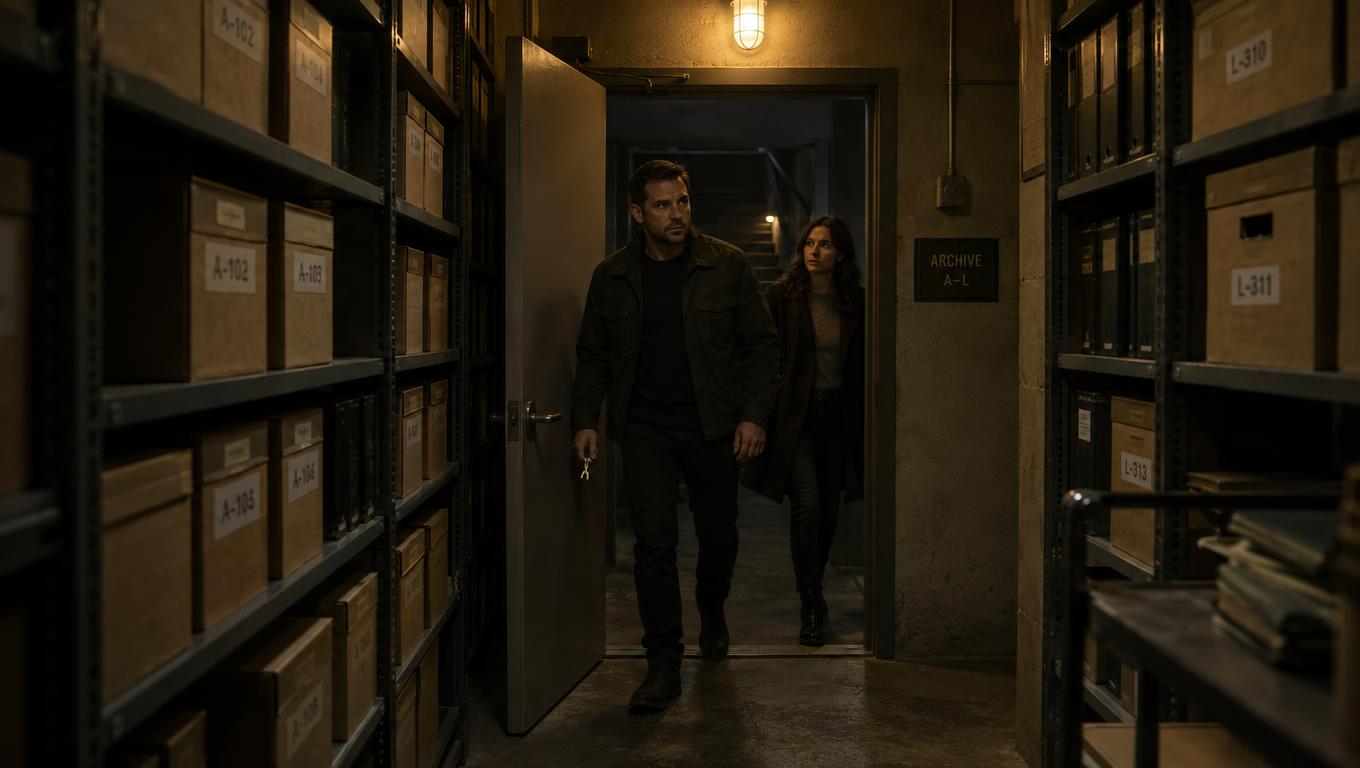
Shot S04 is approved footage of Mara handing Ivo a key on the landing. The director now wants Ivo to receive it earlier, at the doorway, so he can approach the archive door with a clearer sense of purpose. If the team updates the script and leaves S04 in the cut, Mara gives away a key Ivo already holds.
This is an illustrative sequence, not a documented production case. The decision is whether the story needs a visible exchange at the doorway, or whether the existing cut can establish the change. That decision determines which approved material remains usable and what the team is authorised to replace.
Trace what the audience can see, not only what the script says
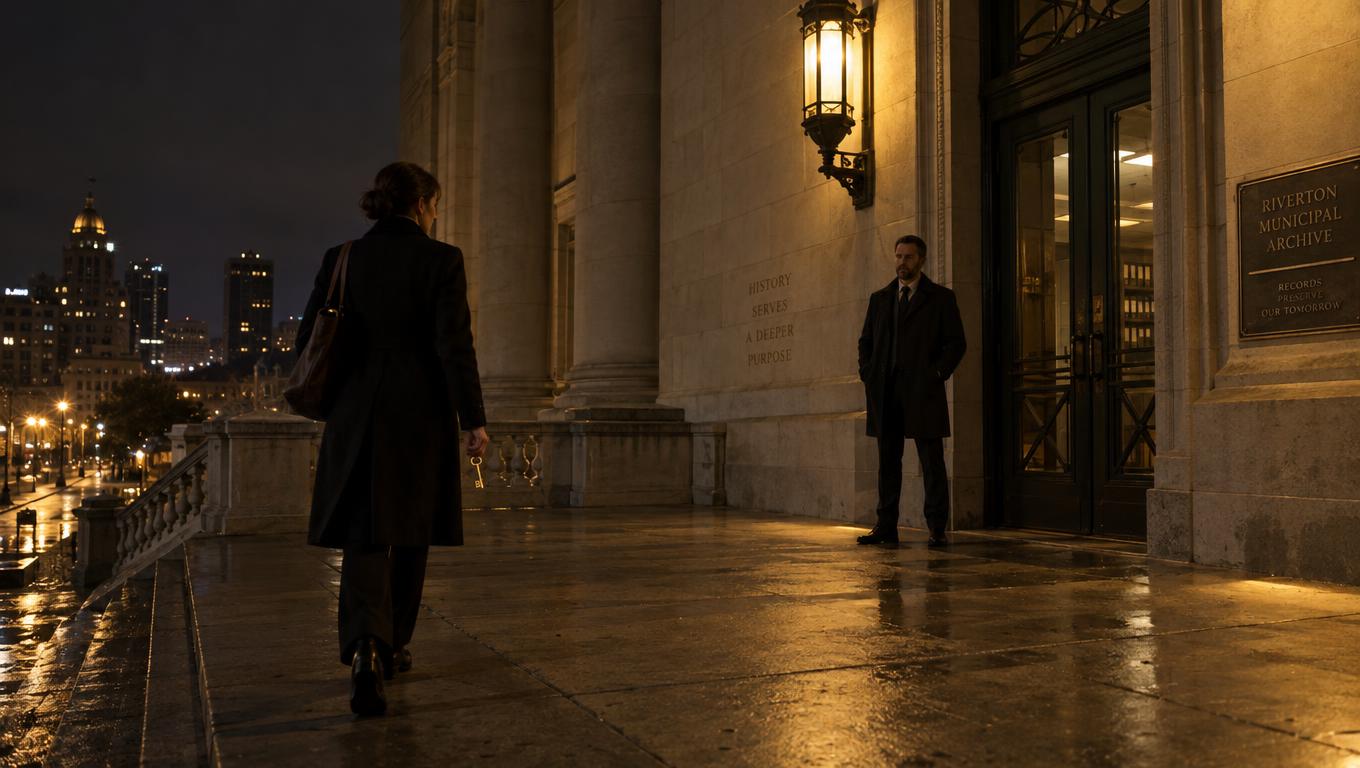
Start with the approved cut and mark the key’s position on both sides of the proposed handoff. A shot with hands out of frame may remain usable; a shot that visibly contradicts the new action cannot be fixed by a continuity note.
| Shot and current status | Approved image | Effect of a doorway handoff |
|---|---|---|
| S01 · approved footage | Mara carries the key down the corridor. | Retain: she still has it before the doorway. |
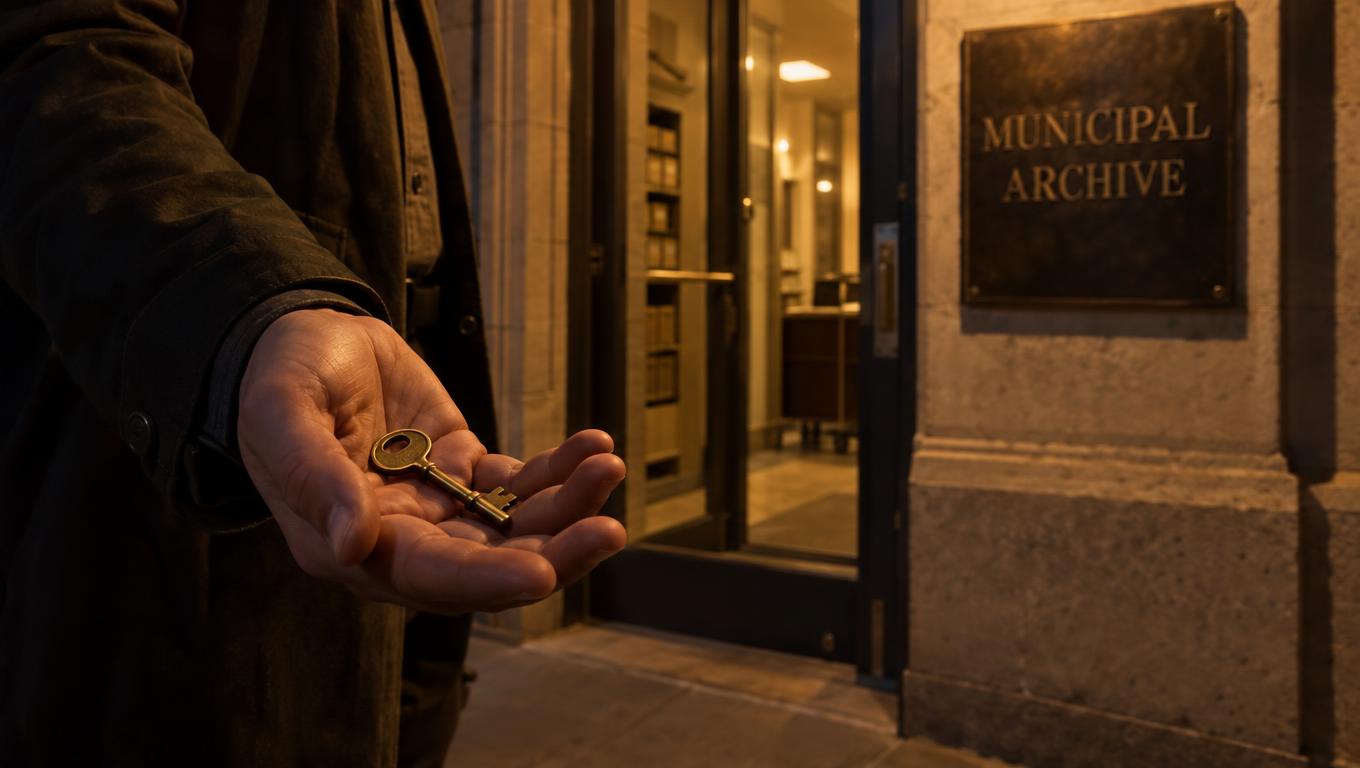
| S02 · approved board and footage | At the doorway, Mara exits frame holding the key. | A visible handoff needs a revised board and replacement footage. An off-screen handoff may use the existing shot if the cut provides a credible moment for it afterward. |
| S03 · approved footage | Close-up on Mara; her hands are out of frame. | Likely retain. Check that her action and the adjoining cut do not imply she still has the key. |
| S04 · approved footage | Mara hands Ivo the key on the landing. | Cannot play as approved. Test whether a trim preserves a useful reaction without showing the second handoff; otherwise remove or replace it. |
| S05 · approved footage | Ivo uses the key at the archive door. | Likely retain, provided the preceding cut establishes his possession. |
The confirmed conflict is S04. S02’s replacement is conditional on showing the earlier exchange; S03 and S05 need review, not automatic regeneration. Keep these proposed states separate from the approved script breakdown until the director chooses the staging.
Test the least disruptive staging that preserves the story beat
A visible exchange at S02 gives Mara’s decision room to play. It also requires the team to board the action, establish which hand takes the key, update prop and hand references, and replace footage that currently ends with Mara holding it. S04 must still be trimmed, removed, or replaced.
An off-screen exchange could happen at the doorway immediately after S02 cuts away. That may preserve S02, but only if the cut allows time for the transfer and the next visible action does not contradict it. S04 remains unusable as a handoff. The editor should test the cut with the existing footage before anyone treats this option as a saving.
There is also a story choice: leave the handoff on the landing and give Ivo another action that establishes his responsibility. It preserves more of the approved sequence, but it does not deliver the director’s requested earlier transfer. The director should choose it for dramatic reasons, not simply because replacing footage is inconvenient.
Turn the cut test into a replacement plan
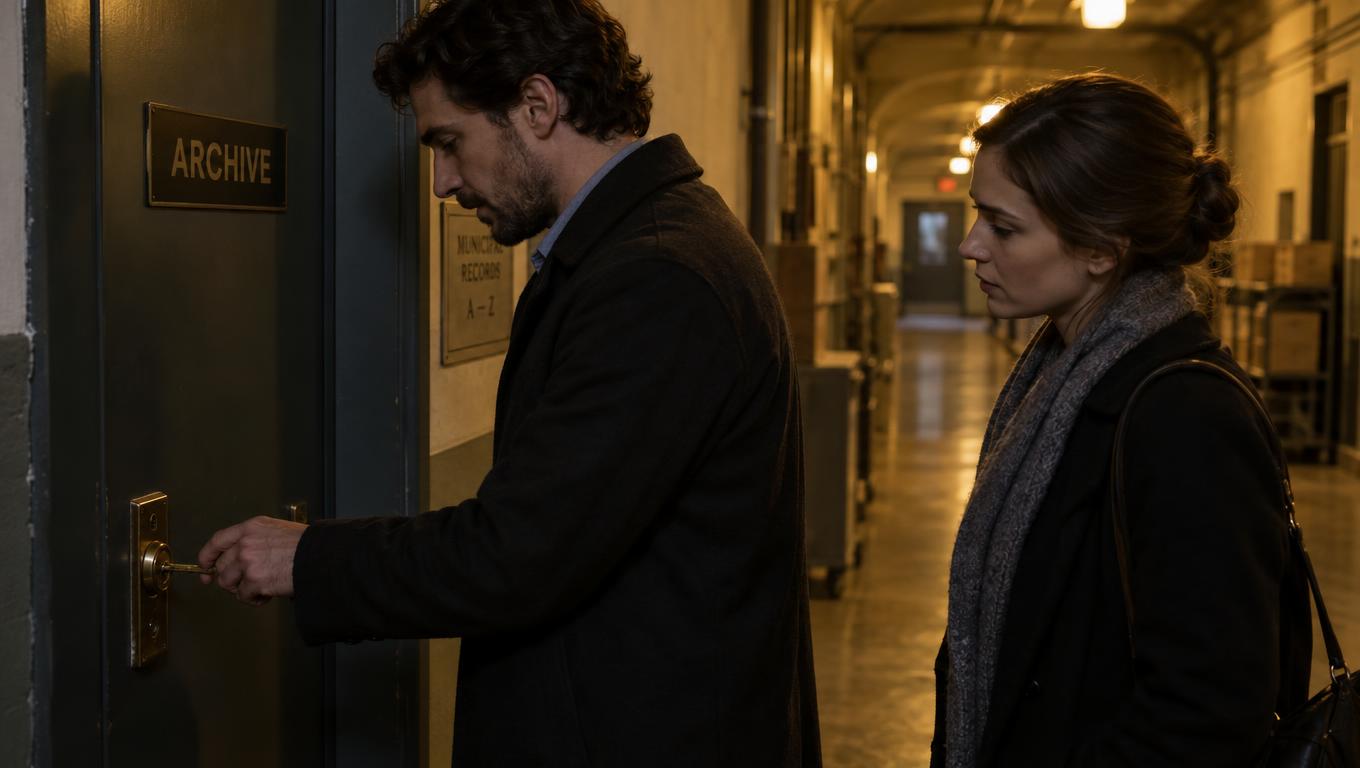
A script breakdown tracks key elements and organizes scenes The editor and generation lead can inspect the actual frames before the producer commits to replacements.
| Work item | Decision or trigger | Next owner action |
|---|---|---|
| S02 doorway | Must the exchange be seen? | If yes, the director approves a revised board before the artist replaces footage. If no, the editor tests the off-screen timing. |
| S04 landing | Can a trim remove the visible handoff and leave a usable beat? | The editor tests a trim. If the key or exchange remains visible, propose removal or replacement. |
| S03 and S05 | Does the assembled cut clearly place the key with Ivo before the lock? | The editor checks the sequence; the artist revises footage only if a visible contradiction remains. |
| References and delivery | Which plan has the director approved, and which shots will change? | The production lead updates prop-state references and shot assignments against that script revision, then routes replacement footage and the adjacent cut for review. |
This record distinguishes an inspection from an instruction to generate. It also prevents approval of the new script line from being mistaken for approval of an unknown amount of shot work.
Release replacement work only after the staging and scope are approved
Sign-off has four steps. First, the creative lead approves the story intent: Ivo receives the key at the doorway. Second, the director decides whether the audience must see the transfer and approves its staging. Third, the editor and generation lead inspect S02–S05 and propose the shots to retain, trim, remove, or replace. Finally, the producer approves that scope and releases the affected boards, references, and footage for revision.
Record those decisions against the same script revision and shot IDs. Preserve the approved sequence as the current production reference until the replacement plan is authorised; then review the revised doorway-to-lock cut, not just its individual shots. No shot revision should proceed without an agreed key position on both sides of the cut, a list of affected IDs, and an owner for approving the resulting sequence.